
A homework worksheet is a printable or digital sheet of structured exercises assigned to students to complete outside regular class time. Merriam-Webster defines homework as assignments completed outside class, which commonly include worksheets with reading tasks or practice exercises. These tools serve teachers, homeschool families, and parents who want to extend learning beyond the classroom. They appear across every subject and grade level, from kindergarten math drills to high school vocabulary practice.
What is a homework worksheet and how does it work?
A homework worksheet is a structured document containing exercises, questions, or tasks aligned to a specific learning goal. The worksheet format organizes practice into a single, focused activity that students complete independently. LearningMole describes printable and digital homework sheets as the two most common formats used by teachers today. Both formats share the same core purpose: reinforcing what students learned in class.
The homework worksheet definition covers a wide range of document types. A math worksheet might include 20 arithmetic problems. A reading worksheet might ask students to answer comprehension questions after a short passage. A science worksheet might ask students to label a diagram or fill in a data table. The format is flexible enough to fit any subject or age group.
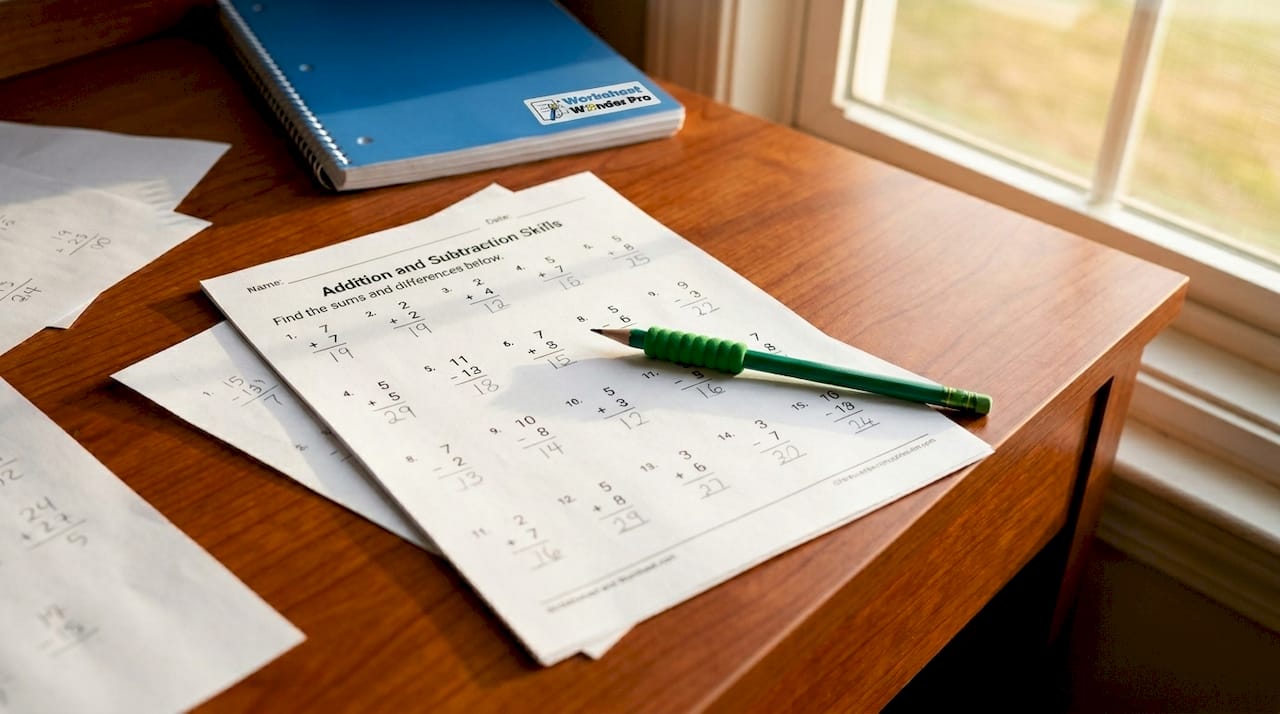
Worksheets are not the same as open-ended projects or essays. They provide a defined structure with a clear start and finish. This makes them practical for students who need focused, low-pressure practice at home.
What are the main types of homework worksheets?
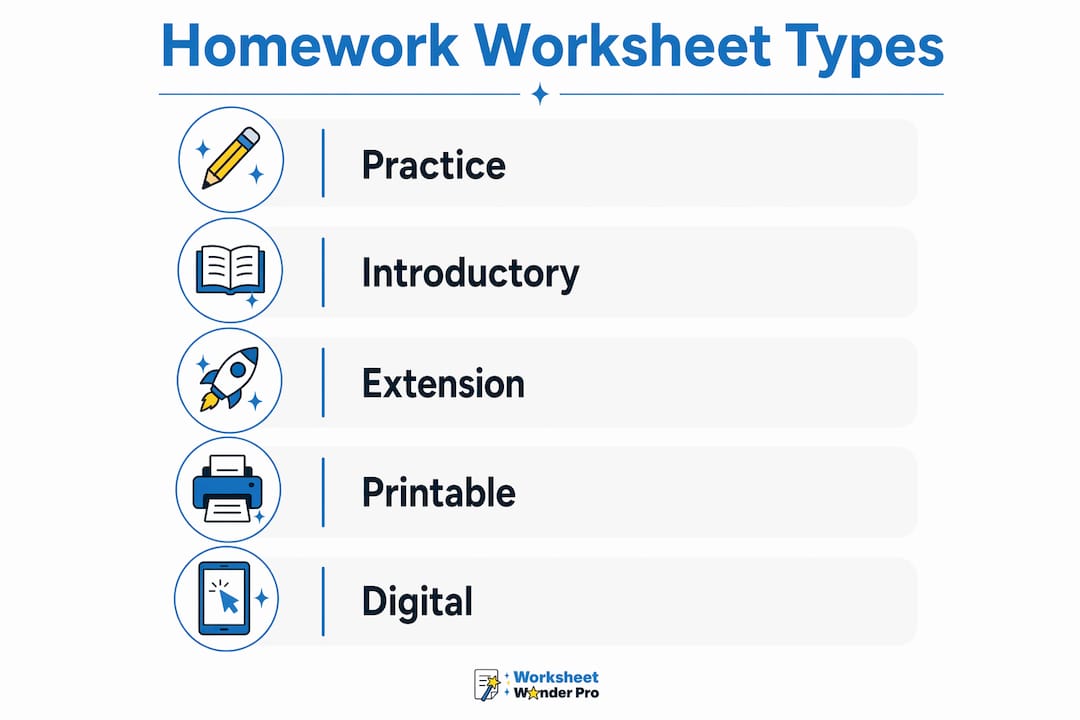
Victoria's education guidance identifies three core homework types: practice assignments, introductory assignments, and extension assignments. Each type serves a different instructional purpose and requires a different worksheet design.
| Type | Purpose | Common exercises |
|---|---|---|
| Practice | Reinforce recently taught skills | Drills, fill-in-the-blanks, matching |
| Introductory | Preview upcoming classroom content | Reading passages, vocabulary lists |
| Extension | Deepen or expand on learned concepts | Creative tasks, research questions |
| Review | Consolidate multiple topics before a test | Mixed question sets, MCQs |
Format is a separate consideration from type. Printable worksheets work well for handwriting practice, drawing tasks, and settings without reliable device access. Digital homework packets maintain consistent formatting and reduce lost assignments, which benefits families managing multiple children. Many educators now offer both formats for the same assignment.
A teacher's guide to worksheet types can help educators match the right format to the right learning goal. The choice between printable and digital also depends on the student's age, the subject, and the school's technology access.
Pro Tip: Use introductory worksheets sparingly. Students who encounter complex new concepts at home without teacher support often develop misconceptions that take longer to correct than if the concept had been introduced in class.
What are the educational benefits of using homework worksheets?
LearningMole states the primary goal of homework sheets is skill reinforcement aligned with classroom learning. This is the clearest benefit: students who practice a skill shortly after learning it retain it longer. A student who learns long division on Monday and completes a practice worksheet that evening consolidates the process before it fades.
Beyond retention, worksheets build independent study habits. Students learn to read instructions, manage their time, and check their own work. These habits transfer to test-taking and self-directed learning later in their academic careers.
For parents, worksheets provide a window into what their child is studying. A parent does not need to be a subject expert to sit beside a child and ask, "What does this question mean?" or "How did you get that answer?" The worksheet creates a shared reference point for that conversation. You can also use worksheets to track student progress over time, which helps both teachers and parents spot gaps early.
However, ASCD warns that worksheet completion does not guarantee learning. A student who copies answers or rushes through a sheet to finish it gains little. The worksheet becomes a compliance task rather than a learning activity.
"Worksheet effectiveness depends on integration with classroom pedagogy and prompting students to think critically." — ASCD
Pro Tip: Align every worksheet directly to a lesson taught that week. If a parent or student cannot connect the worksheet to something covered in class, the assignment likely needs redesign.
How to create effective homework worksheets
ASCD notes that well-designed worksheets reduce guessing and increase productive learning time through clarity of expectations. This means every worksheet needs three non-negotiable elements: clear instructions, specific success criteria, and a way for students to check their work.
Follow these steps to build a worksheet that actually teaches:
- Define the learning goal. Write one sentence describing what the student should be able to do after completing the sheet. Every question should connect to that goal.
- Choose exercise types that match the goal. Effective language worksheets use matching, multiple-choice questions, and fill-in-the-blanks together to promote engagement and comprehension. Mixing formats keeps students focused and tests the skill from multiple angles.
- Write instructions a student can follow without help. Test this by reading the instructions aloud. If they require explanation, rewrite them.
- Set the length based on age. Victoria's Department of Education stresses that homework design must consider developmental and curricular needs. A grade 2 worksheet should take 10 to 15 minutes. A grade 8 worksheet can reasonably take 30 minutes.
- Include an answer key or rubric. This allows students to self-check and parents to give accurate feedback without needing subject expertise.
Avoid common pitfalls by reviewing worksheet design mistakes before finalizing any assignment. Cluttered layouts, ambiguous questions, and missing answer keys are the three most frequent problems in poorly performing worksheets.
| Design element | Why it matters |
|---|---|
| Clear instructions | Reduces time spent guessing what to do |
| Mixed exercise types | Tests the skill from multiple angles |
| Age-appropriate length | Prevents frustration and disengagement |
| Answer key or rubric | Enables self-checking and parent support |
How do worksheets differ from other homework types?
A homework worksheet for kids differs from project-based homework, reading assignments, and oral practice tasks in one key way: it provides a fixed structure with defined responses. Projects require planning, creativity, and multi-step execution. Reading assignments build comprehension but rarely ask students to produce structured output. Oral tasks like reciting multiplication tables or practicing a speech develop fluency but leave no written record.
Worksheets sit in a specific lane. They are best for:
- Practicing a skill that requires repetition (arithmetic, spelling, grammar)
- Checking whether a student understands a concept before the next class
- Providing a low-stakes record of practice that teachers can review quickly
They are less effective for developing critical thinking, creativity, or collaborative skills. Project-based worksheets offer a middle ground, combining structured tasks with open-ended components. A well-rounded homework program uses worksheets alongside other formats rather than relying on them exclusively. Worksheet variety improves outcomes precisely because no single format develops every skill students need.
Key takeaways
Homework worksheets are most effective when they reinforce recent classroom learning, use varied exercise types, and include clear instructions with an answer key.
| Point | Details |
|---|---|
| Core definition | A homework worksheet is a structured document of exercises assigned for practice outside class. |
| Three main types | Practice, introductory, and extension worksheets each serve a distinct instructional purpose. |
| Primary benefit | Skill reinforcement aligned to recent classroom learning improves retention and builds study habits. |
| Design non-negotiables | Clear instructions, age-appropriate length, and an answer key are required for effective worksheets. |
| Key limitation | Worksheets alone do not develop critical thinking; they work best alongside other homework formats. |
Worksheets as tools, not targets
I have reviewed hundreds of worksheet assignments over the years, and the pattern is consistent. The worksheets that produce real learning are the ones where the teacher clearly knew why they assigned it. The goal was specific. The exercises matched the goal. The student could finish it independently and check their own work.
The worksheets that fail are the ones assigned out of habit. Ten pages of the same problem type. No connection to what happened in class that week. No answer key. Students complete them because they have to, not because the work means anything.
My honest observation is that parents often focus on whether the worksheet is finished rather than whether it was understood. Sitting with a child for five minutes and asking them to explain one answer teaches more than checking that every box is filled in. The worksheet is a starting point for that conversation, not the end of it.
Digital worksheets have made distribution easier, but they have not automatically made worksheets better. A poorly designed worksheet delivered as a PDF is still a poorly designed worksheet. Format is secondary to purpose.
— Pamela
Create better worksheets with Worksheetwonderpro
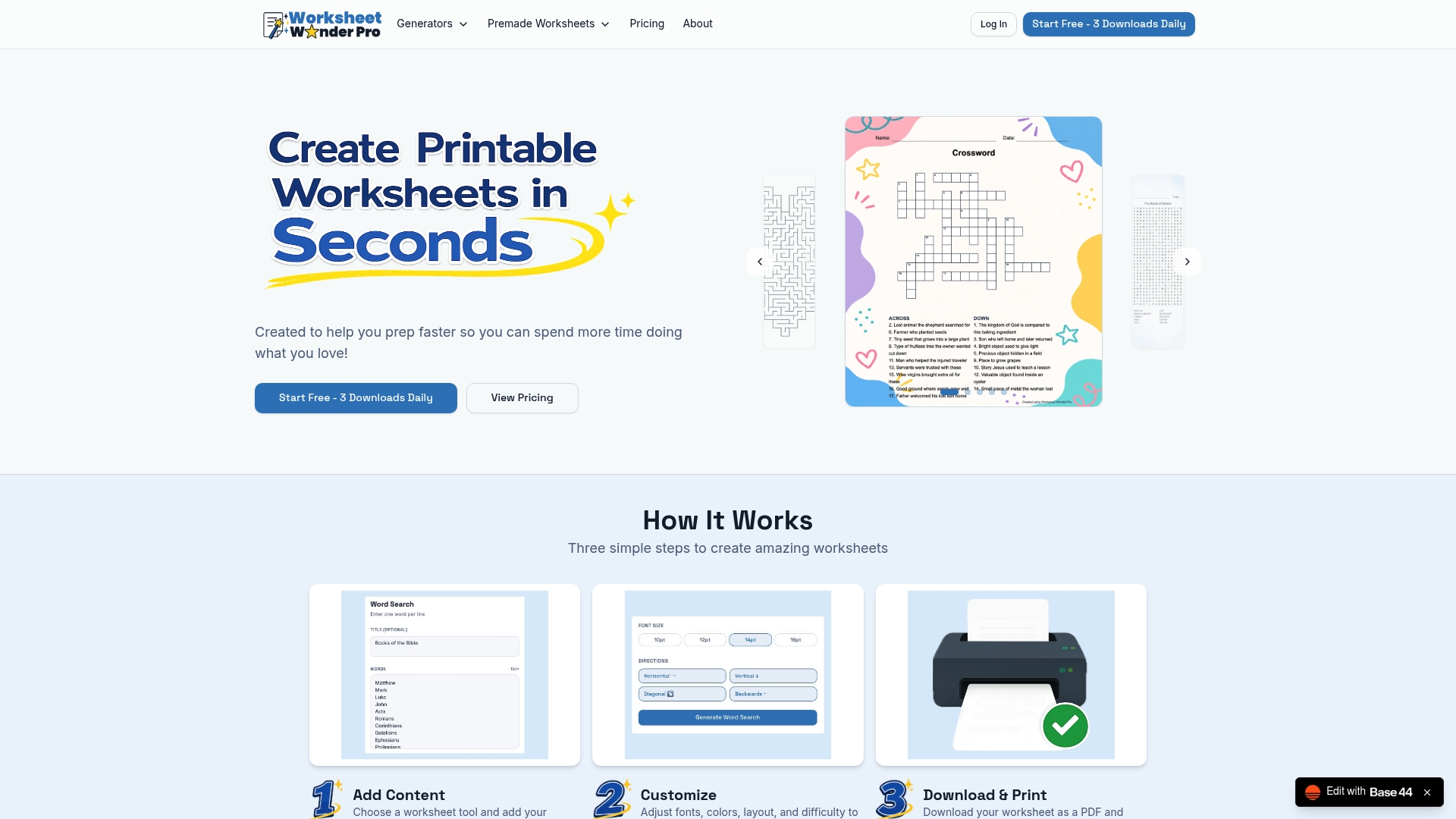
Worksheetwonderpro equips teachers, homeschool families, and ministry leaders with tools to build printable and digital worksheets fast. The platform offers customizable templates across subjects and grade levels, so you can create practice, introductory, or extension worksheets without starting from scratch. Worksheetwonderpro supports multiple exercise formats including matching, fill-in-the-blanks, and multiple-choice questions. Teachers can access dedicated teacher resources to design assignments that align directly with classroom learning goals. Whether you need a single worksheet for tonight's homework or a full unit packet, the platform makes creation straightforward and consistent.
FAQ
What is the homework worksheet definition?
A homework worksheet is a structured document of exercises or tasks assigned to students to complete outside regular class time. It supports skill reinforcement and is available in both printable and digital formats.
What are the main types of homework worksheets?
The three main types are practice worksheets, introductory worksheets, and extension worksheets. Each type serves a different learning purpose, from drilling recent skills to previewing new content.
What are the benefits of homework worksheets for kids?
Homework worksheets reinforce recently taught skills, build independent study habits, and give parents a clear view of what their child is learning. They are most effective when aligned to specific classroom lessons.
How do you create an effective homework worksheet?
Start with a single, clear learning goal, then choose exercise types that test that goal from multiple angles. Include explicit instructions, set an age-appropriate length, and always provide an answer key or rubric.
How are worksheets different from other homework formats?
Worksheets provide a fixed structure with defined responses, making them ideal for skill practice and quick comprehension checks. They differ from projects, reading assignments, and oral tasks, which develop creativity, fluency, and critical thinking.