
Drill worksheets get a bad reputation. Many homeschool parents hear "drill" and picture their child mindlessly copying the same problem forty times. That misconception is worth clearing up. A drill worksheet homeschool tool is a structured, repetitive exercise designed to build speed and recall of concepts a child has already learned. It does not introduce new material. It locks in what your child already understands. This article explains what drill worksheets are, where to find them, how to create them, and how to use them without letting them take over your school day.
Table of Contents
- Key takeaways
- What a drill worksheet is in homeschool education
- Finding free and reliable drill worksheets
- Creating customized drill worksheets
- Integrating drill worksheets into your homeschool routine
- My take on drill worksheets after years of watching them used
- Build better drill worksheets with Worksheetwonderpro
- FAQ
Key takeaways
| Point | Details |
|---|---|
| Drills reinforce, not teach | Use drill worksheets only after a concept has been introduced and understood by the child. |
| Free resources are plentiful | Thousands of free drill worksheets are available online without logins or paywalls. |
| Customization takes minutes | Creating a personalized drill worksheet at home takes less than 15 minutes with free tools. |
| Answer keys build independence | Worksheets with answer keys let children self-check, reducing your grading time significantly. |
| Integration matters most | Drills work best when aligned with current lessons, not used as random filler activities. |
What a drill worksheet is in homeschool education
A drill worksheet is a repetitive, structured exercise focused on improving speed and recall of foundational concepts. In grades 1 through 5, these worksheets most often cover addition, subtraction, multiplication, and division. They can be timed or untimed depending on the learning goal.
The key distinction is that drills reinforce fluency, not initial understanding. A child who cannot yet grasp the concept of multiplication will not benefit from a multiplication drill sheet. But a child who understands the concept and just needs repetition to reach quick, accurate recall will gain a lot from consistent drill practice. That distinction matters.
Drill worksheets are not limited to math. They appear in spelling, grammar, and foreign language practice too. Any subject where fast, accurate recall builds a foundation for deeper work is a candidate for drill practice. For homeschoolers, this format is useful because it is self-contained, easy to assign independently, and easy to measure.

Pro Tip: If your child still needs to count on fingers to solve basic addition problems, that is a signal they are ready for drill worksheets. The counting phase is learning. The drill phase is locking in what they already know.
Here is what makes a drill worksheet different from other types of worksheets in your homeschool toolkit:
- It contains many similar problems in a short space, not a variety of question types
- It focuses on one skill per sheet, such as multiplication by 7 or two-digit subtraction
- It is designed for repeated use across days or weeks
- It measures improvement over time, not just completion
Finding free and reliable drill worksheets
Homeschool parents can access thousands of quality free drill worksheets online without creating an account or hitting a paywall. Some platforms offer more than 25,000 free worksheets across grade levels and subjects. That range is useful. The challenge is not finding worksheets. It is selecting the right ones.
Here is a comparison of what to look for versus what to avoid when selecting drill worksheets:
| Feature to look for | Feature to avoid |
|---|---|
| Matches current lesson topic exactly | Random mix of unrelated skills |
| Includes a built-in answer key | No answer key provided |
| Age and skill level appropriate | Too easy or too advanced for current stage |
| Clean layout with clear instructions | Cluttered or confusing formatting |
| Printable and free without login | Requires subscription to access |
The biggest trap homeschool parents fall into is printing worksheets at random. Targeted worksheets aligned with your current unit reinforce learning effectively. A sheet on long division handed to a child who is three units away from covering that topic serves no purpose. Always match the worksheet to where your child is right now.
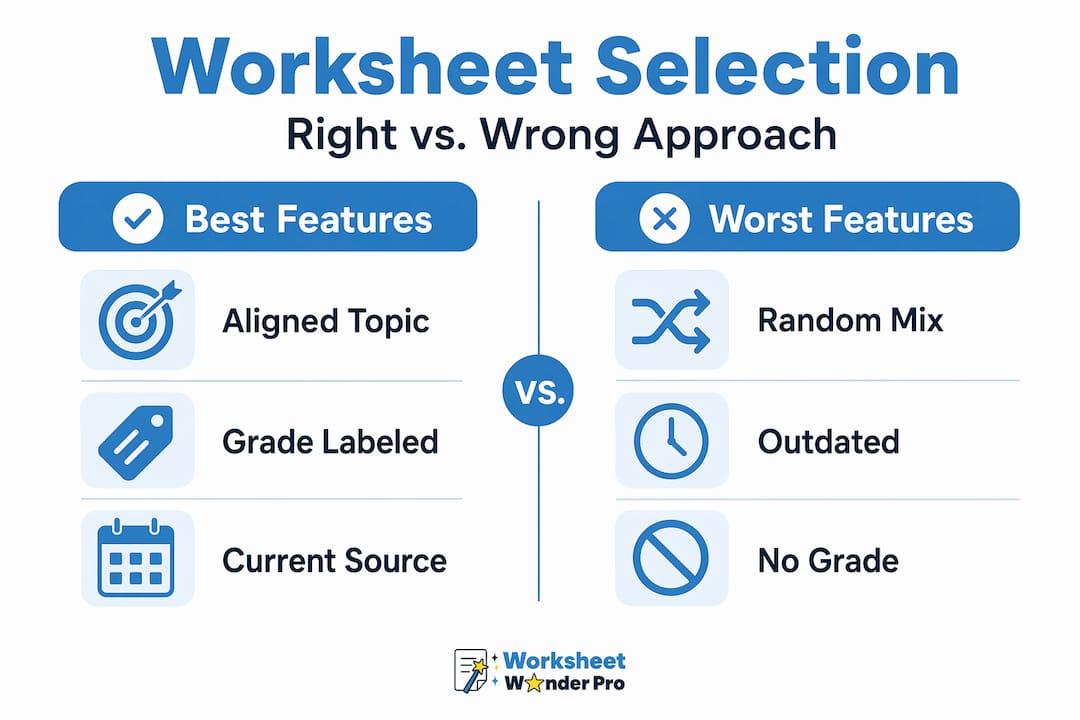
When browsing for free drill worksheets for homeschool use, check that the source is updated and that grade level labels match your curriculum standards. Many free repositories are reliable, but some use outdated scope and sequence guides. A quick review of a few problems before printing will save you time.
Creating customized drill worksheets
Creating your own drill worksheets is faster than most parents expect. Creating drill worksheets at home takes less than 15 minutes with free tools, and the result is a sheet tailored exactly to what your child needs right now.
Follow these steps to create a basic drill worksheet from scratch:
- Pick one skill. Choose a single, narrow focus. "Multiplication by 6" is better than "multiplication facts." Narrow focus produces better results.
- Choose your tool. A free spreadsheet program, a word processor, or a dedicated worksheet generator all work. Worksheetwonderpro offers a custom worksheet tool that speeds up the process further.
- Set the number of problems. Twenty to thirty problems is a solid range for most drill sessions. Too few and the practice is not sufficient. Too many and the child fatigues before finishing.
- Write clear instructions. State exactly what the child should do. "Solve each multiplication problem. Show your work below each problem if needed." Do not assume your child knows what is expected.
- Add an answer key on a separate page. Answer keys reduce parent grading time and teach children to self-check their work. This is one of the most practical things you can do for your homeschool routine.
Customization enhances engagement and lets you target specific learning gaps. If your child keeps getting 8 x 7 wrong, you can build a short drill sheet that includes that fact twelve times across different problem formats. No pre-made free worksheet will do that for you.
Pro Tip: Add a small theme your child enjoys, like space or animals, to the header of the worksheet. It takes thirty seconds and can noticeably change how a child approaches the work.
Integrating drill worksheets into your homeschool routine
Knowing how to use drill worksheets well is just as important as finding or creating them. Dropped into the wrong part of a lesson, they lose their value. Used at the right moment, they speed up fluency and build real confidence.
Here are the core practices that make drill worksheets effective in a homeschool setting:
- Use drills after instruction, not before. The child must understand the concept first. Drills aid automaticity through practice, but they cannot replace teaching.
- Keep sessions short. Ten to fifteen minutes of focused drill practice is more effective than a forty-minute session. Fatigue drops accuracy and does not speed up learning.
- Track results over time. A simple chart showing how many problems a child completed correctly each day gives both of you a visible record of progress. Use a worksheet tracking system if helpful.
- Let your child self-assess. Give the child the answer key after completing the sheet. Self-checking builds independence and critical thinking. It also removes the pressure of waiting for parental feedback.
- Rotate topics. Revisit earlier drill topics weekly to prevent forgetting. Spaced repetition across subjects is more effective than drilling one topic until it is memorized, then abandoning it.
Drill practice worksheets work best as one part of a balanced school day. They should support your curriculum, not become it.
My take on drill worksheets after years of watching them used
I have seen drill worksheets help children go from slow, uncertain calculating to fast, confident math work. I have also seen them used in ways that caused real damage to a child's relationship with learning.
The mistake I see most often is using drills as the primary teaching method. When a child is still confused about the concept and a parent hands them a drill sheet expecting repetition to fix the confusion, the child just practices being wrong. That builds frustration, not fluency.
What I have found actually works: teach first, drill second. Keep the sheets short. Use answer keys every single time. And rotate topics so older skills stay sharp. If your child dreads drill time, the sheet is either too hard, too long, or too disconnected from what they have been learning.
Creating your own worksheets is worth the time. Pre-made free drill worksheets are useful, but a sheet built around exactly what your child is struggling with right now does something generic resources cannot do.
— Pamela
Build better drill worksheets with Worksheetwonderpro
Worksheetwonderpro gives homeschool parents a fast way to create and find drill worksheets without the guesswork.
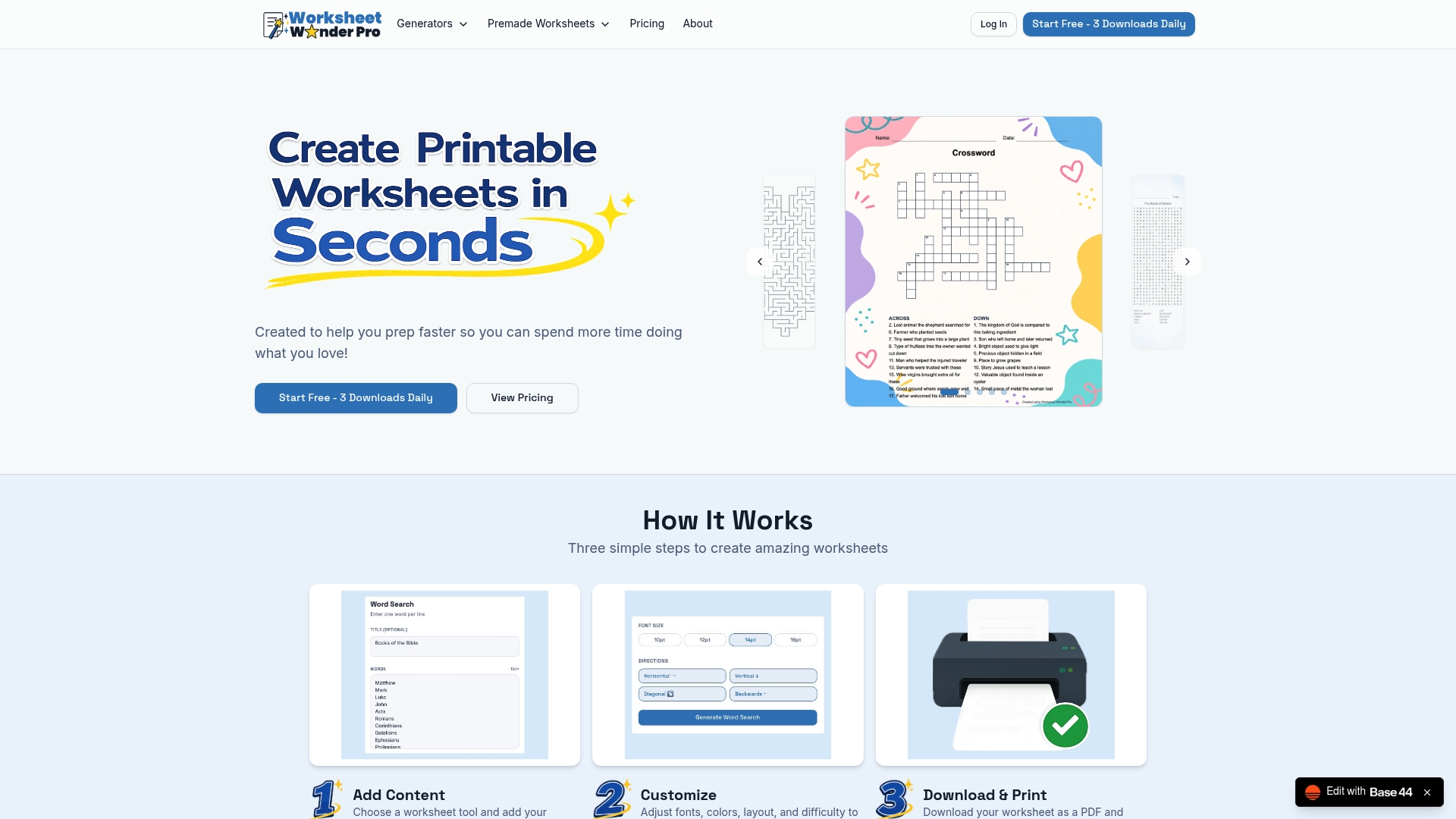
The platform includes a library of premade drill worksheets ready to print, plus a creation tool that lets you customize problems, difficulty levels, and layout in minutes. There are also teacher resources organized by subject and skill level. Whether you need a quick subtraction drill or a full week of math practice sheets, Worksheetwonderpro has the tools to get it done without spending hours searching or designing from scratch.
FAQ
What is a drill worksheet in homeschooling?
A drill worksheet is a structured, repetitive exercise used to build speed and recall of a skill a child has already learned. It is a reinforcement tool, not a teaching tool.
How often should homeschoolers use drill worksheets?
Short drill sessions of ten to fifteen minutes, three to five days per week, are sufficient for most subjects. Consistent, brief practice builds fluency faster than occasional long sessions.
Where can you find free drill worksheets for homeschool?
Many platforms offer thousands of free worksheets without requiring a login. Always match the worksheet to your current lesson topic rather than printing at random.
Should drill worksheets always include an answer key?
Yes. Worksheets without an answer key miss the pedagogical advantage of independent correction. Answer keys let children self-check and build confidence.
Can you create a drill worksheet without design experience?
Yes. Free tools like spreadsheet programs or dedicated generators make it possible to build a functional drill worksheet in under fifteen minutes, with no design background required.