
Completing a worksheet does not automatically mean a student is prepared for an exam. Many students and educators assume that quantity of practice equals quality of preparation, but that belief leads to wasted time. A test prep worksheet is a specific type of structured educational tool designed to reinforce academic skills and build familiarity with exam formats. Understanding exactly what a test prep worksheet is, how it works, and when to use it makes the difference between busy work and real progress.
Table of Contents
- Key takeaways
- What is a test prep worksheet
- Benefits of using test prep worksheets
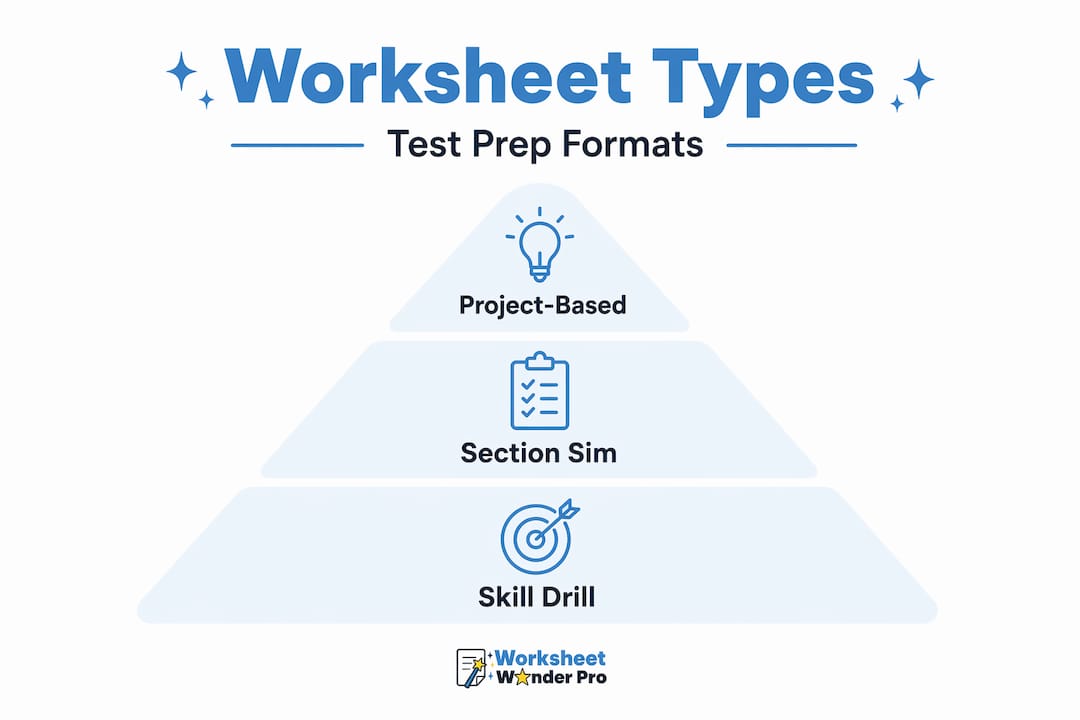
- Types of test prep worksheets
- How to create and use test prep worksheets effectively
- Comparing worksheets to other study tools
- My take on worksheets in test prep
- Build better test prep worksheets with Worksheetwonderpro
- FAQ
Key takeaways
| Point | Details |
|---|---|
| Clear definition matters | A test prep worksheet is a targeted exercise tool, not just any printed assignment. |
| Skill focus beats content review | Worksheets work best when they target high-impact skills identified through diagnostic assessment. |
| Format variety improves readiness | Different worksheet types serve different purposes; using only one type limits exam preparation. |
| Active review drives improvement | Analyzing wrong answers builds more skill than simply completing exercises. |
| Worksheets support, not replace, teaching | Worksheets are most effective when combined with instruction and other study methods. |
What is a test prep worksheet
A test prep worksheet is a structured educational resource that contains targeted exercises designed to reinforce specific academic skills and familiarize students with exam question formats. It differs from a general classroom assignment because its purpose is tied directly to exam readiness rather than initial instruction.
These worksheets typically include several question formats. Common formats are:
- Multiple-choice questions that mirror standardized test structures
- Fill-in-the-blank and matching exercises for vocabulary and concept recall
- Short answer and essay-style prompts that build written response skills
- Diagrams and charts requiring interpretation or labeling
- Answer keys that allow students to self-assess their performance
The answer key is not an afterthought. It transforms a passive exercise into a feedback tool. A student who checks and analyzes their answers is doing active learning, not just filling in blanks. That distinction is central to understanding what makes a test preparation worksheet effective rather than routine.
Test preparation worksheets also vary in scope. Some cover a single skill in depth. Others simulate a full section of an exam. The format used should always match the learning goal for that session.
Benefits of using test prep worksheets
When used correctly, test preparation worksheets offer several concrete advantages for students preparing for academic exams.
- Consistent daily practice builds retention. Short, focused practice of 10 to 15 minutes daily, started weeks before a test, produces better results than intensive cramming the night before.
- Active recall strengthens memory. Retrieving information through worksheet exercises forces the brain to reconstruct knowledge, which solidifies learning more effectively than re-reading notes.
- Format familiarity reduces test anxiety. Practicing specific question types and interface mechanics reduces disorientation during timed exams, particularly when new formats are involved.
- Targeted practice closes skill gaps. After a diagnostic assessment, a student can use worksheets to focus specifically on weak areas rather than reviewing content they already know.
- Timed worksheet practice builds exam pacing. Working through exercises under time constraints teaches students to manage their pace and prioritize questions strategically.
Pro Tip: Do not assign worksheets before a diagnostic. Running a brief assessment first identifies which skills need the most attention, so worksheet practice targets the right gaps from the start.
The benefits of test prep worksheets are tied to how students use them. Passive completion, where a student fills in answers without reviewing mistakes, produces minimal gains. The real value appears when students analyze their mistakes and trace errors back to specific skill weaknesses.

Types of test prep worksheets
Different testing goals call for different worksheet formats. Understanding the main types helps educators and students select the right tool for each stage of preparation.
| Worksheet Type | Best Use Case | Format |
|---|---|---|
| Skill drill worksheet | Practicing isolated academic skills like inferencing or algebra | Printed or digital |
| Practice test worksheet | Simulating full exam conditions with timed sections | Printed preferred |
| Review and summary sheet | Organizing key concepts before an exam | Printed or digital |
| Project-based worksheet | Encouraging analysis and deeper engagement with content | Printed or digital |
Skill drill worksheets target specific, high-impact skills such as algebraic modeling, proportional reasoning, or close reading inference. These are the skills standardized tests assess most frequently, and drilling them in isolation produces faster gains than broad content review.
Practice test worksheets simulate actual exam conditions. Printed practice tests improve timing, annotation habits, and realistic exam experience in ways that digital screens sometimes do not replicate fully.
Other worksheet types include:
- Study guide worksheets that organize facts and formulas into a review format
- Vocabulary matching sheets for content-area terminology
- Error analysis worksheets that prompt students to explain why an answer was wrong
For educators looking to go deeper on project-based worksheets, there are structured formats that push students beyond recall into genuine analysis and application.
How to create and use test prep worksheets effectively
Designing a test prep worksheet that actually helps requires more than copying exam questions onto a page. The structure, focus, and follow-up all matter.
Start with a diagnostic. Using a diagnostic test first, followed by targeted skill worksheets, and then a second full-length timed test, produces measurable progress. Skipping the diagnostic and jumping straight into practice often reinforces the same errors.
Focus on fewer skills per worksheet. A worksheet that covers one or two skills thoroughly is more useful than one that touches ten skills lightly. Depth beats breadth in targeted test prep.
Pro Tip: Build in a self-correction step on every worksheet. Ask students to mark each incorrect answer, identify the skill involved, and write a one-sentence explanation of their error. This single habit accelerates score improvement faster than any other worksheet strategy.
Practical steps for educators when creating test preparation worksheets:
- Align each question directly to a tested standard or skill
- Include an answer key with brief explanations, not just correct answers
- Vary question formats across the worksheet to reflect actual exam diversity
- Avoid common worksheet design mistakes like cluttered layouts or ambiguous instructions
- Schedule short daily sessions rather than one long weekly session
For students, the most effective approach is to treat each worksheet as a feedback tool. Completing it is step one. Reviewing every error and identifying the specific skill that needs work is step two. That second step is where the real learning happens.
Comparing worksheets to other study tools
Worksheets are one tool among several. Understanding when to use them and when to switch to a different method makes test prep more effective.
| Study Tool | Strength | Limitation |
|---|---|---|
| Test prep worksheets | Skill repetition, format practice | Can narrow thinking if overused |
| Flashcards | Vocabulary and fact recall | Limited for applied reasoning |
| Full practice tests | Realistic exam simulation | Less useful for targeted skill gaps |
| Sketchnoting or thinking maps | Deep conceptual processing | Time-intensive |
Worksheets used in isolation can reduce student curiosity and critical thinking over time. Alternative strategies like sketchnoting or concept mapping promote deeper cognitive engagement. The most effective test prep programs use worksheets alongside these methods, not instead of them. See the types of classroom worksheets guide for a broader view of how different formats fit together.
My take on worksheets in test prep
I've worked with educators long enough to know that worksheets get misused more often than not. The most common mistake I see is treating worksheet completion as the end goal. A student who fills out 20 worksheets without ever reviewing their errors has not prepared for an exam. They have practiced making the same mistakes repeatedly.
The research on this is clear. Metacognition, reviewing why an answer was wrong rather than just noting that it was wrong, is the mechanism that actually produces score gains. Worksheets are only the vehicle. Error analysis is the engine.
I've also seen teachers replace direct instruction with worksheets entirely, which narrows thinking and removes the inquiry that makes learning stick. A well-designed worksheet supports good teaching. It does not substitute for it. My practical advice: use worksheets to reinforce and assess, not to introduce or replace.
— Pamela
Build better test prep worksheets with Worksheetwonderpro
Creating test prep worksheets from scratch takes time that teachers and homeschool families rarely have.
Worksheetwonderpro provides tools that make worksheet creation fast and targeted. The platform supports skill-based formats, multiple question types, and printable layouts that align with real exam structures. Educators can access ready-made templates, customize them for specific skills or subjects, and generate answer keys without extra steps. Whether you need a quick skill drill for tomorrow's class or a full practice worksheet for an upcoming standardized test, Worksheetwonderpro's teacher resources cover the full range of test prep needs.
FAQ
What is a test prep worksheet exactly?
A test prep worksheet is a structured educational document with targeted exercises designed to reinforce academic skills and build familiarity with exam question formats. It typically includes multiple question types and an answer key for self-assessment.
How are test prep worksheets different from regular homework?
Regular homework often introduces or extends content covered in class. Test preparation worksheets focus specifically on skills and question formats that appear on exams, with the goal of building exam readiness rather than teaching new material.
What types of questions appear on test prep worksheets?
Test preparation worksheets commonly include multiple-choice, fill-in-the-blank, short answer, matching, and essay-style questions, along with diagrams and charts that reflect actual exam content and formats.
How often should students use test prep worksheets?
Experts recommend 10 to 15 minutes of focused daily practice starting several weeks before an exam, combined with at least two full-length timed practice tests during the preparation period.
Can test prep worksheets replace full practice tests?
No. Worksheets are best used for targeted skill practice, while full practice tests simulate realistic exam conditions and pacing. Both serve different roles and work best when used together as part of a structured preparation plan.