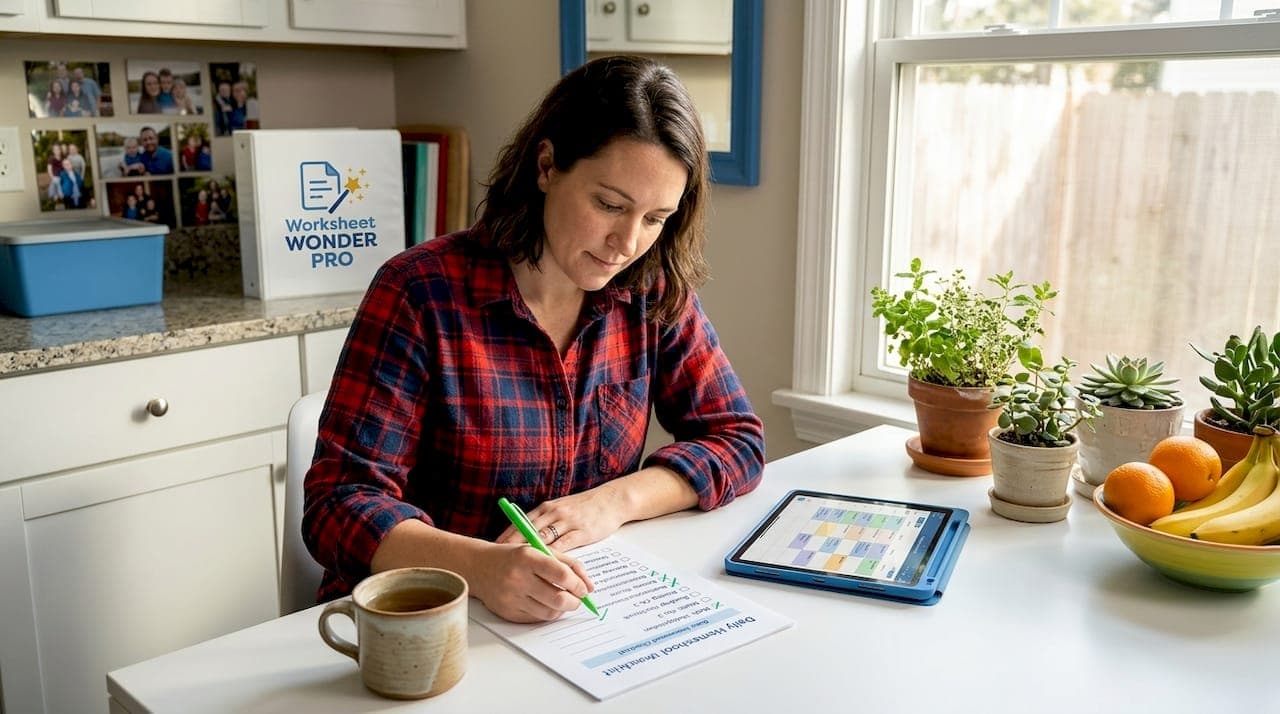
A homeschool worksheet checklist daily is a structured planning tool that organizes academic tasks, non-academic routines, and progress tracking into one reference a student can follow independently. The most effective versions combine dated work blocks, subject checkboxes, and notes space for exceptions, giving both parent and child a clear picture of what gets done each day. Tools like digital planners, printable subject cards, and attendance trackers each serve a distinct role in this system. When built correctly, a daily education checklist reduces parental reminders, supports compliance recordkeeping, and builds real student accountability from the first week of use.
1. What a daily homeschool worksheet checklist should include
A well-designed homeschool worksheet checklist daily covers more than just academic subjects. Dated work blocks with checkboxes and a notes column for interruptions or special events form the structural backbone of any effective template. Without that notes space, a missed day creates confusion rather than a simple record.
Core subjects belong on the checklist every day. Math, Reading, and Writing appear daily in most homeschool schedules, while History and Science rotate on a lower frequency. This distinction matters because it tells you which checklist rows repeat daily and which rotate weekly.
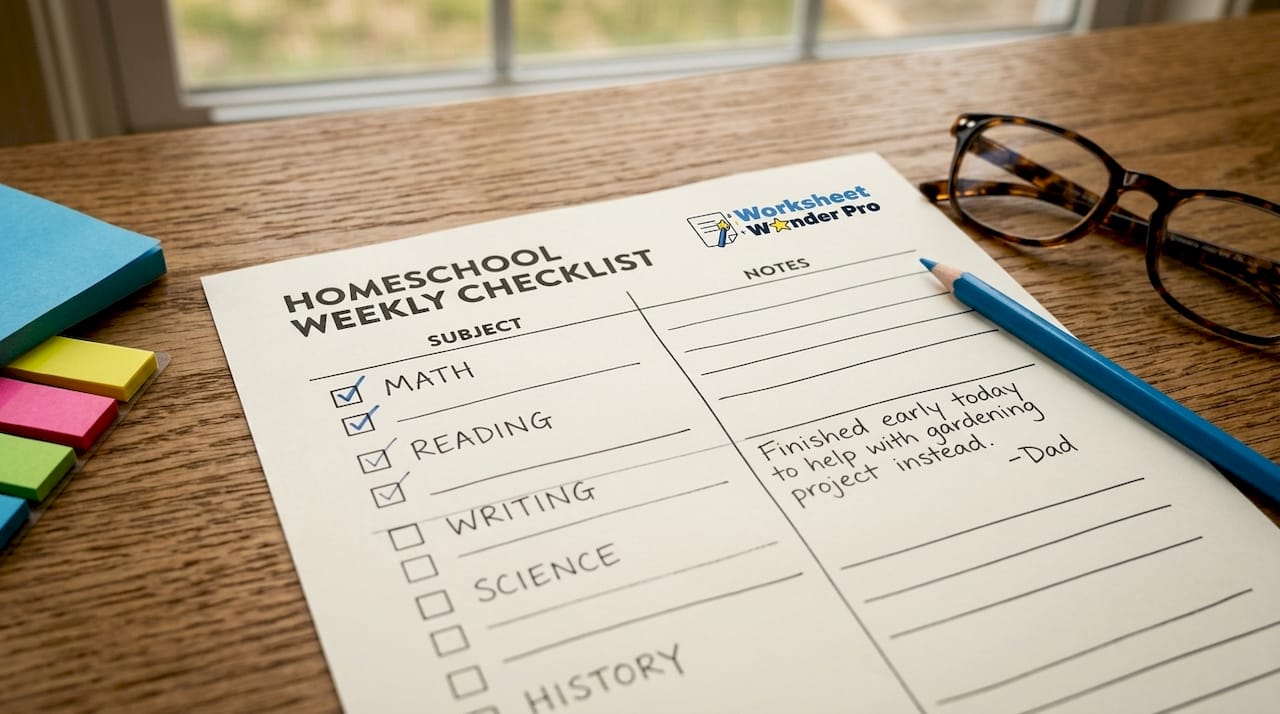
Non-academic routines belong on the checklist too. Morning routines, chores, and end-of-day confirmations prevent the checklist from functioning as a purely academic reference, which research shows is less effective. Including these layers reduces the number of times a parent has to verbally prompt a child throughout the day.
Tools for independence complete the picture. Movable subject cards that students mark completed themselves, or student clipboards holding the day's worksheets, give children physical ownership of their progress. That physical ownership is what converts a checklist from a parent's tracking sheet into a student's self-management tool.
Pro Tip: Design the notes column wide enough to record a reason for any incomplete task. This single field saves hours of reconstructed recordkeeping at the end of a grading period.
2. How checklist formats compare
Not every worksheet checklist for homeschool works the same way. Format choice affects how much independence a student can exercise and how much administrative work falls on the parent.
| Format | Best for | Limitation |
|---|---|---|
| Printed weekly template | Families who prefer paper and plan ahead | Requires reprinting when schedules shift |
| Daily single-sheet checklist | Younger students needing simple daily focus | Less useful for multi-week tracking |
| Digital planner with self-check | Older students with phone or tablet access | Requires device discipline |
| Clipboard with perforated sheets | Families combining worksheets and tracking | Physical setup takes initial time |
| Attendance-oriented checklist | Compliance-focused recordkeeping | Less useful as a daily task guide |
Printed weekly and daily templates suit families who prefer paper. They are fast to grab, require no device, and give students a tangible checklist to hold. The trade-off is that any schedule change means reprinting or crossing out rows.
Digital homeschool planners offer repeating day patterns and student self-checking through phone-optimized interfaces. Students can upload completed work directly, which simplifies grading. The limitation is that device access during school hours can introduce distraction if not managed deliberately.
Clipboard systems hold perforated worksheets alongside a lesson tracker, so unfinished tasks stay attached to the board rather than getting lost. Attendance trackers that combine daily checkboxes with monthly cumulative tallies belong in a separate binder, not on the daily clipboard. Keeping these two documents separate reduces complexity and keeps compliance records clean.
3. Best practices for using a daily checklist effectively
Starting simple is the most reliable path to a working homeschool daily routine. Limiting checklist categories at the start prevents overwhelm and helps children build a repeatable rhythm before more subjects or tasks are added. A checklist with three subject rows and two routine rows is more likely to be completed than one with twelve items on day one.
Layering the checklist over time adds structure without rigidity. Begin with core academics and morning routine. Add chores and end-of-day tasks in week two. Introduce rotating subjects in week three. This gradual build mirrors how routine charts segmented into morning, schoolwork, and end-of-day reduce repeated verbal reminders by making expectations visible rather than spoken.
Flexibility is not optional. Homeschool days shift for appointments, illness, and family events. A checklist that allows a student to mark a task "complete later" without rewriting the whole sheet keeps the system functional on difficult days. Clipboards with perforated worksheets handle this well because incomplete work stays physically attached and visible.
Combining paper and digital tools produces the most practical result. Paper checklists provide focus during active school hours, while digital tools handle grading, uploads, and long-term recordkeeping. This split keeps screens out of the immediate work session while preserving the organizational benefits of digital tracking.
Pro Tip: Attach the day's printable homeschool worksheets directly to the clipboard beneath the checklist. When a student finishes a worksheet, they move it to the back. An empty clipboard means the day is done.
4. Free and premium resources for daily checklist templates
Several reliable sources offer ready-to-use templates across different formats and price points.
- Free printable daily and weekly checklists: Sites like Homeschool Better Together offer clipboard and checklist downloads combining worksheet attachments with dated work blocks and checkbox rows.
- Attendance trackers: Mama's Learning Corner publishes a free attendance tracker covering the full school year with daily checkboxes, note space, and monthly cumulative tallies.
- Subject card systems: Illustrated subject card sets, including options from Teachers Pay Teachers, give students movable physical markers to track completed work independently.
- Digital planners: Platforms reviewed at Inside Our Normal provide phone-optimized daily planners with self-checking grids and student upload features.
- Editable PDF templates: Fillable PDF checklists allow parents to customize subject names, frequency, and routine rows without redesigning from scratch.
| Resource type | Cost | Key feature |
|---|---|---|
| Free printable checklist | Free | Quick download, paper-ready |
| Editable PDF template | Free to low cost | Customizable fields |
| Digital planner subscription | Paid | Self-check, upload, mobile access |
| Subject card set | Low cost | Physical independence tool |
| Attendance tracker | Free | Compliance-ready monthly tallies |
Pro Tip: Download both a daily checklist template and a separate attendance tracker. Use the checklist for moment-to-moment task management and the tracker for end-of-month compliance records. Mixing the two into one sheet creates confusion.
Worksheetwonderpro also offers printable and digital worksheet templates that work alongside daily checklists, covering subject-specific practice sheets parents can attach directly to a student clipboard.
Key takeaways
A daily homeschool checklist works best when it combines core academic tasks, non-academic routines, and a notes field, then separates daily task tracking from long-term attendance records.
| Point | Details |
|---|---|
| Include routines, not just subjects | Morning, chores, and end-of-day tasks reduce verbal prompting and build accountability. |
| Start with fewer checklist rows | Limiting categories at launch prevents overwhelm and builds a repeatable daily rhythm. |
| Separate daily and attendance records | Keep task checklists and compliance trackers in different documents to reduce complexity. |
| Match format to student age | Younger students benefit from simple paper checklists; older students can use digital self-check planners. |
| Use a hybrid paper-digital system | Paper provides focus during school hours; digital tools handle grading and long-term recordkeeping. |
What I've learned from watching families use daily checklists
Most parents start with a checklist that is too detailed. They list every subject, every sub-task, and every time block, then abandon the whole system by week three because it takes longer to fill out than to just tell the child what to do. The checklists that actually survive a full school year are the ones that look almost too simple on day one.
The other pattern I notice is that parents underestimate how much a physical checklist changes a child's behavior. When a student holds a clipboard and marks off a box themselves, they are doing something fundamentally different from following verbal instructions. That physical act of checking a box transfers ownership. It is not a small thing.
I am also skeptical of fully digital systems for younger students. A phone-optimized planner is genuinely useful for a twelve-year-old. For a seven-year-old, it adds a layer of friction and distraction that a printed sheet on a clipboard does not. The types of worksheets that work best in early homeschool years are tactile and paper-based, and the checklist should match that.
The families I see thrive with daily checklists treat them as living documents. They cross things out, add rows in pencil, and reprint every few weeks as the routine evolves. Rigidity is the enemy of a system that has to work across an entire school year.
— Pamela
How Worksheetwonderpro helps you build a better daily checklist
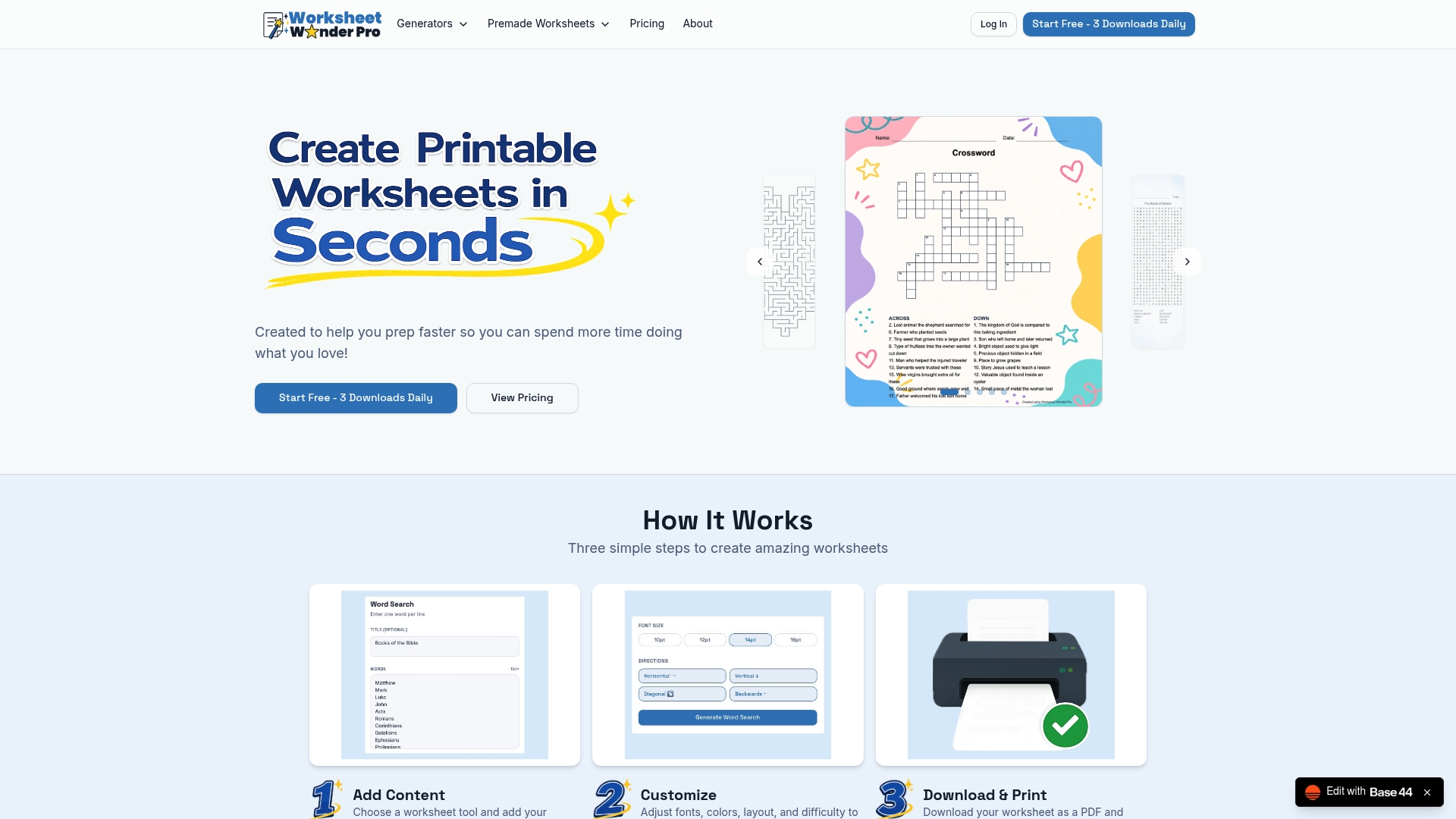
Worksheetwonderpro provides homeschool parents with customizable worksheet and planner templates designed to work as a complete daily system. Templates include editable PDF checklists with fillable subject rows, printable daily planners formatted for student clipboards, and subject-specific practice sheets that attach directly to a daily checklist. Every resource is built for fast setup and immediate use, so parents spend less time designing and more time teaching. Visit Worksheetwonderpro to browse the full template library, or access free downloadable resources to start building your daily checklist system today.
FAQ
What goes on a daily homeschool checklist?
A daily homeschool checklist includes core academic subjects like Math, Reading, and Writing, plus non-academic routines such as morning tasks, chores, and end-of-day confirmation. Adding a notes column for exceptions makes the checklist useful for compliance recordkeeping as well.
How is a daily checklist different from an attendance tracker?
A daily checklist manages moment-to-moment task completion during the school day, while an attendance tracker records cumulative school days for compliance purposes. Keeping these as separate documents reduces confusion and makes both more functional.
Should a homeschool checklist be paper or digital?
Paper checklists work better for younger students and active school hours because they reduce screen distraction and give children a physical task to complete. Digital planners suit older students and work best for grading, uploads, and long-term recordkeeping rather than daily task management.
How many items should a daily checklist have?
Start with five to seven items covering core subjects and basic routines. Experts recommend limiting checklist categories at the start to build a manageable daily rhythm before adding more subjects or tasks.
Can a checklist help reduce how often I remind my child?
Yes. Routine charts and checklists that display daily expectations visually reduce the need for repeated verbal prompting by transferring task awareness to the student rather than the parent.