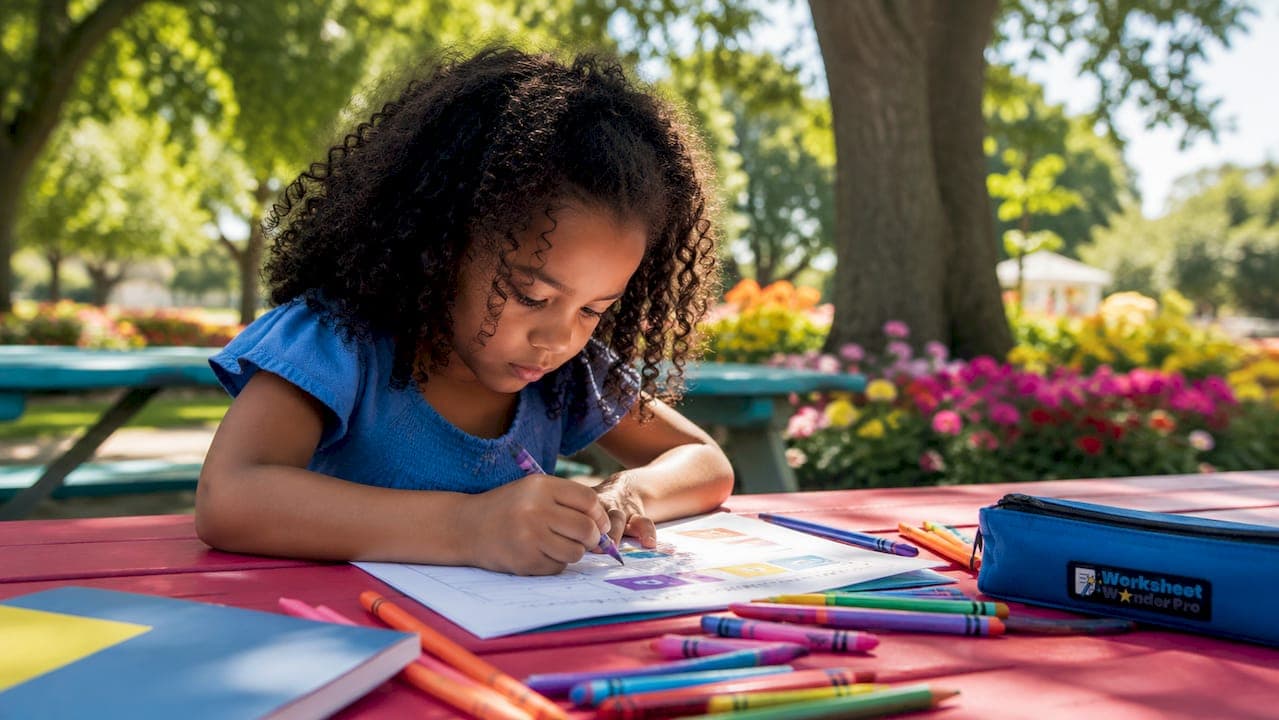
Worksheets for kindergartners are structured learning activities designed to build early childhood skills through targeted, age-appropriate practice. The best ones go far beyond copying letters on a page. They combine tracing, coloring, word building, and logic tasks into a sequence that matches where a child actually is developmentally. Worksheetwonderpro, along with resources like Smart Little Bunnies, Superstar Worksheets, and Mary's Printables, has shown that purposeful design separates skill-building worksheets from simple busy work. This article breaks down the types that work and explains why each one matters.
1. What are worksheets for kindergartners?
Kindergarten worksheets, also called kindergarten activity sheets, are printable or digital learning pages that target specific early childhood skills. These include letter recognition, number sense, fine motor control, and basic logic. They are not the same as coloring pages or generic fill-in-the-blank sheets. A well-designed worksheet aligns with a child's developmental stage and builds toward a measurable skill. Parents and educators use them to reinforce classroom learning, support homeschool programs, and fill productive practice time at home.
2. Letter recognition and writing worksheets
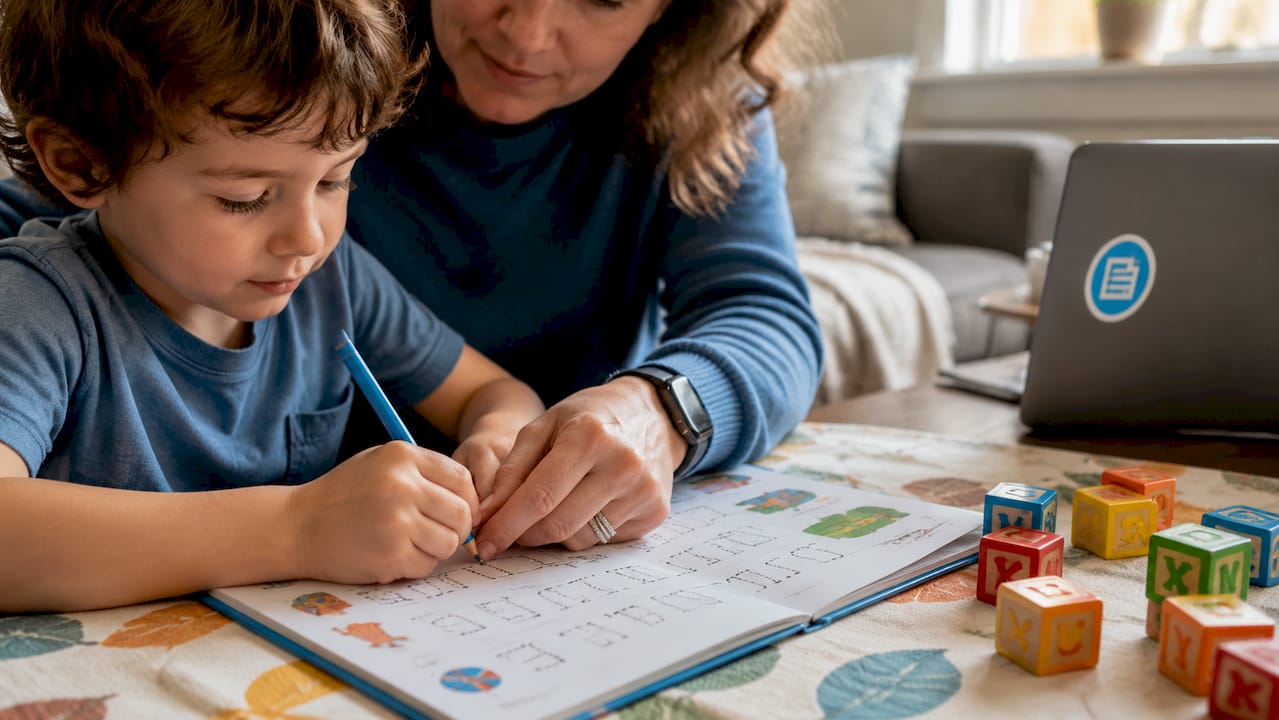
Letter recognition worksheets ask children to identify, trace, and write uppercase and lowercase letters. These are foundational for reading and writing development. The most effective versions include a model letter at the top, a tracing row, and a blank row for independent writing. This three-step format builds muscle memory and visual recognition at the same time. Tracing activities also develop pencil grip and hand strength, which carry over into all other written work.
3. Sight word multi-activity worksheets
Sight word worksheets are among the most research-supported tools in early literacy. Effective sight word worksheets contain at least 6 different activities per word, including tracing, independent writing, coloring, identifying, highlighting, and sentence building. That variety matters because children learn through repetition across multiple modes, not just one. A child who traces "the," then colors it, then finds it in a sentence has processed the word six different ways. That depth of exposure is what produces real retention.
4. Early math worksheets
Early math worksheets cover number tracing, counting objects, simple addition, and shape recognition. These printable worksheets for kids work best when they connect abstract numbers to concrete visuals. For example, a worksheet that shows five apples next to the numeral 5 gives children a reference point before they practice writing the number. Number tracing builds the same motor skills as letter tracing, so the two types of worksheets reinforce each other. Simple addition worksheets with pictures rather than just numerals are appropriate for ages 5 to 6.
5. Fine motor and logic skill worksheets
Mazes, dot-to-dot pages, shape matching, and cutting guides all fall into the fine motor and logic category. These worksheets build hand-eye coordination, spatial reasoning, and the ability to follow a sequence. A maze requires a child to plan ahead and self-correct, which are early executive function skills. Shape matching worksheets train visual discrimination, a skill directly tied to letter and number recognition. These are often underused in favor of academic worksheets, but they support the physical and cognitive foundation that academic work depends on.
6. How to choose worksheets by developmental stage
Printable worksheets for kindergarten should be tiered by developmental stage. Children ages 2 to 4 benefit most from tracing lines, matching shapes, and simple coloring tasks. Children ages 5 to 6 are ready for word building, logic puzzles, and early math operations. Skipping foundational stages creates gaps. A 5-year-old who has not yet developed pencil control will struggle with letter writing worksheets, no matter how well designed they are. Matching the worksheet to the child's current ability level produces faster progress and fewer frustrations.
Pro Tip: Start each new worksheet type with a verbal walkthrough. Show the child what the finished page should look like before they begin. This removes confusion and keeps the session moving.
7. No-prep and black-and-white formats
No-prep, black-and-white worksheet sets reduce printing cost and preparation time, which is why parents and teachers consistently prefer them. A 30-page no-prep pack can be printed in minutes and used across an entire unit. Black-and-white pages also work better for children who color in the worksheet as part of the activity, since color ink does not compete with the child's own work. For homeschool families and classroom teachers managing limited budgets, no-prep formats are the practical standard.
8. What makes a worksheet build mastery instead of busy work
The difference between a mastery-building worksheet and busy work is intentional design. The Superstar Learning System focuses on creating "Superstar Moments," where students reach confident mastery and feel motivated to continue. That outcome requires worksheets built on cognitive principles, not just repetition for its own sake.
"Worksheets should prioritize intentional skill-building to avoid becoming meaningless busy work; focusing on learners' Superstar Moments can motivate and build confidence." — Superstar Worksheets
A worksheet that asks a child to trace a letter 20 times in a row is repetition. A worksheet that asks a child to trace, then write from memory, then find the letter in a word is progression. Progression builds mastery. Repetition alone builds compliance.
You can read more about this design principle in Worksheetwonderpro's breakdown of skill drill frameworks for students.
9. Blending digital and printable worksheets
Combining digital learning with physical printable worksheets produces the most effective and visible results in young children's learning outcomes. Digital platforms like Keiki offer structured practice that complements paper worksheets without replacing them. The physical act of writing on paper builds motor skills that screen-based tools cannot replicate. Digital tools, on the other hand, provide instant feedback and adaptive difficulty. Using both gives children the benefits of each format. Worksheetwonderpro covers this approach in detail in its guide on digital printable versions.
10. Practical tips for reusable and durable worksheets
Smart worksheet use comes down to a few consistent habits:
- Laminate worksheets for repeated use with dry-erase markers. A single laminated sheet can be practiced dozens of times throughout the school year.
- Print on heavier 24lb paper for tracing and writing activities. It holds up when children press hard with pencils and does not tear mid-session.
- Keep sessions to 5 to 10 minutes. Short, focused sessions build positive learning associations without fatigue.
- Celebrate effort, not perfection. A child who tries every item on the page has done the work, regardless of accuracy.
- Organize worksheets into portable kits by skill type so they are ready to use anywhere.
Pro Tip: Laminate a set of 10 core worksheets at the start of the school year. Rotate them weekly with dry-erase markers and you will never run out of practice material.
Key takeaways
Worksheets for kindergartners work best when they are tiered by developmental stage, designed for multi-modal practice, and used in short, consistent sessions that celebrate effort over perfection.
| Point | Details |
|---|---|
| Tier by developmental stage | Match worksheet complexity to the child's age: tracing for ages 2 to 4, word and math tasks for ages 5 to 6. |
| Use multi-modal activities | Effective sight word worksheets include at least 6 activity types per word to build real retention. |
| Prioritize mastery over repetition | Design worksheets with progression, not just repetition, to create confident skill-building moments. |
| Blend digital and print formats | Combining paper worksheets with digital tools produces stronger and more visible learning outcomes. |
| Make worksheets reusable | Laminating sheets and using dry-erase markers saves time, paper, and money across the school year. |
What I have learned from watching kids work through worksheets
I have spent years watching children sit down with worksheets, and the pattern is consistent. The kids who stay engaged are not the ones given the most worksheets. They are the ones given the right worksheets at the right time. A 4-year-old handed a word-building sheet will shut down within two minutes. The same child handed a shape-tracing page will work through it twice.
The conventional advice is to find worksheets that are "fun." That is not wrong, but it misses the point. Engagement comes from competence. When a child can do the task, they want to do it again. That is why developmental alignment matters more than visual design. A brightly colored worksheet that is too hard produces frustration. A plain black-and-white sheet at the right level produces focus.
I also think parents underestimate the value of short sessions. Five focused minutes with one worksheet beats 30 distracted minutes with a stack of them. The goal is not to cover ground. The goal is to build a habit of sitting down, trying, and finishing. That habit is worth more than any individual skill the worksheet targets.
— Pamela
Build better kindergarten worksheets with Worksheetwonderpro
Worksheetwonderpro gives teachers, homeschool families, and ministry leaders the tools to create and access high-quality kindergarten worksheets without the prep time.
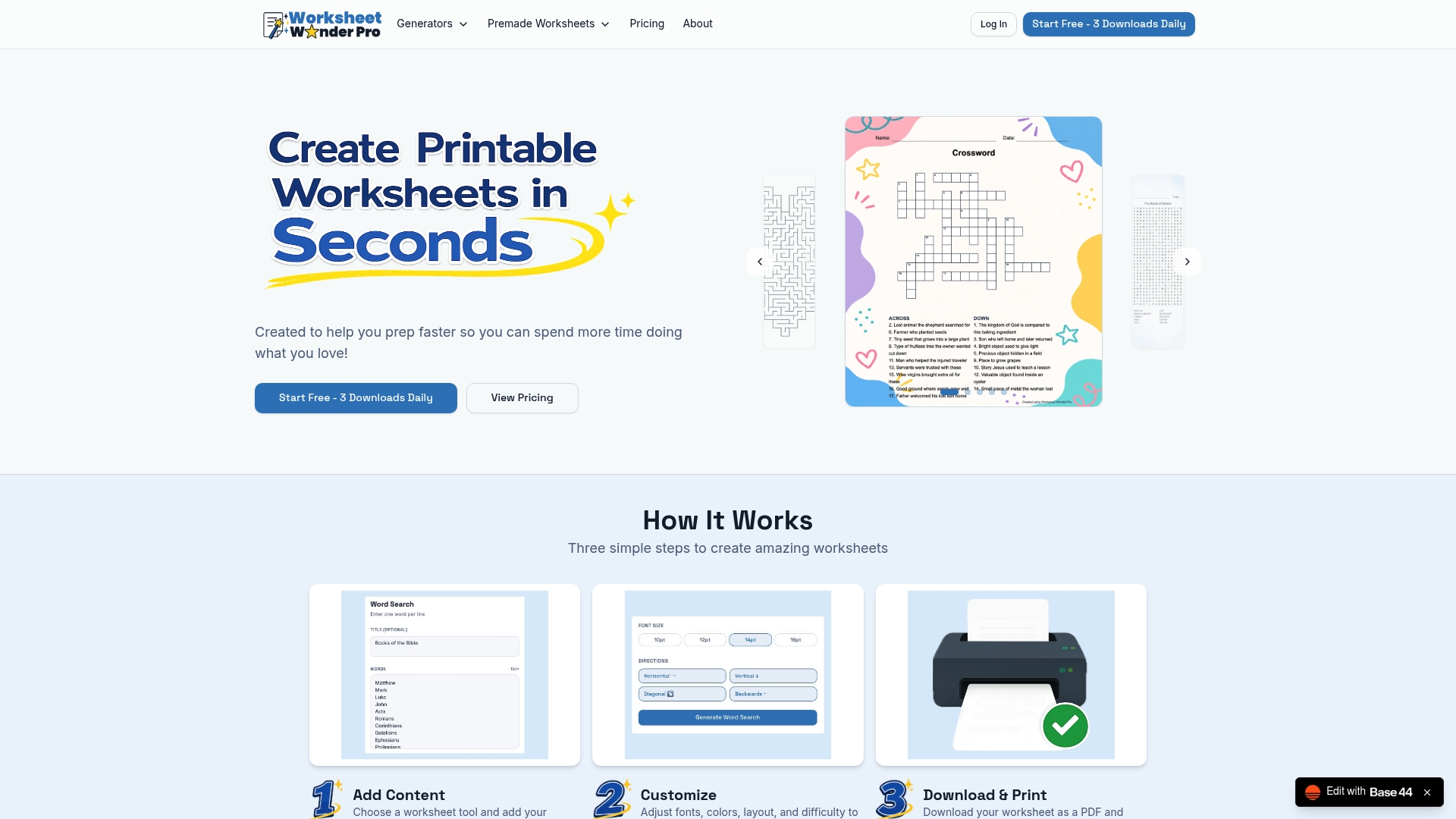
The premade worksheet sets at Worksheetwonderpro are tiered by developmental stage and cover letter recognition, sight words, early math, and fine motor skills. Free resources are available at Worksheetwonderpro's free resources page for parents and educators who want to explore before committing. For those who want full control, the worksheet creator lets you build custom sheets in minutes. Visit Worksheetwonderpro to find the right starting point for your classroom or home.
FAQ
What are kindergarten worksheets used for?
Kindergarten worksheets build early childhood skills including letter recognition, number sense, fine motor control, and basic logic through structured, age-appropriate practice activities.
How many activities should a sight word worksheet include?
Effective sight word worksheets include at least 6 different activities per word, such as tracing, writing, coloring, identifying, highlighting, and sentence building, to support mastery through multi-modal repetition.
What paper is best for printing kindergarten worksheets?
24lb paper is recommended for tracing and writing worksheets. It is slightly thicker than standard 20lb copy paper and holds up when young children press hard with pencils.
How long should a kindergarten worksheet session last?
Sessions of 5 to 10 minutes are most effective for kindergartners. Short, focused sessions build positive learning associations and reduce frustration or fatigue.
Are preschool worksheets different from kindergarten worksheets?
Preschool worksheets focus on foundational motor skills like tracing lines and matching shapes, while kindergarten worksheets advance to letter writing, word building, and early math tasks aligned to ages 5 to 6.