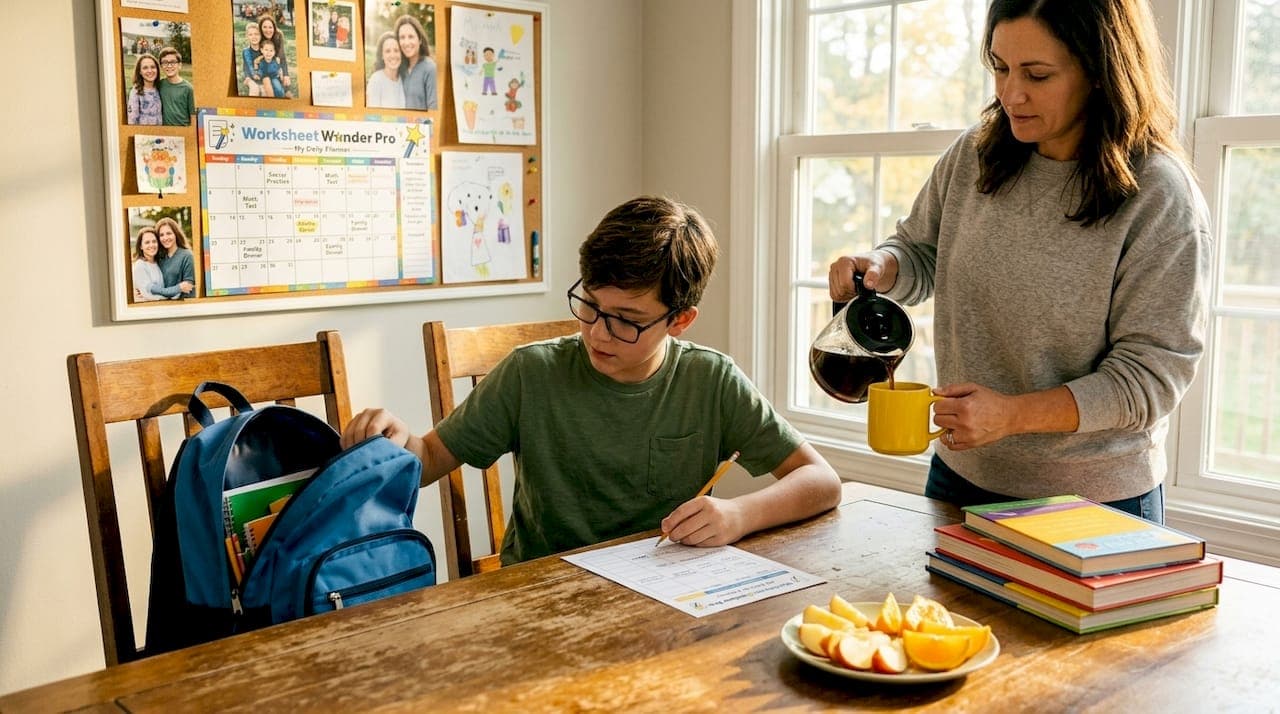
A student planner worksheet is a structured paper or digital document designed to help students organize assignments, track goals, and manage time across a school term. It goes well beyond a simple agenda or calendar. Many students and parents assume that any notebook with dates qualifies as a planner. That misunderstanding matters because a genuine worksheet for academic planning includes behavioral tools like habit trackers, goal-setting sections, and time-blocking grids that directly support academic performance. This guide explains what these tools contain, how they work, and how to choose and use one effectively.
Table of Contents
- Key Takeaways
- What is a student planner worksheet and what does it include
- How planner worksheets support academic behaviors
- Choosing the right planner format
- How to use a student planner worksheet effectively
- Examples and templates to get started
- My perspective on what actually makes these tools work
- Start planning smarter with Worksheetwonderpro
- FAQ
Key Takeaways
| Point | Details |
|---|---|
| More than a calendar | A student planner worksheet includes assignment trackers, habit logs, and goal sections beyond simple date grids. |
| Behavior drives results | Planner designs that make correct academic behaviors easy to follow produce better outcomes than visually complex ones. |
| Format matters | Matching planner layout to how a student records homework by day or by subject improves speed and usability. |
| Daily use builds habits | Checking the planner morning and evening and breaking tasks into steps reduces overwhelm over time. |
| Digital and paper both work | Tablet-based digital planners and printed worksheets each offer advantages depending on student lifestyle and preference. |
What is a student planner worksheet and what does it include
A student planner worksheet is a structured academic planning document. The recognized term in education circles is an "academic planner" or "study planner," though the worksheet format specifically refers to a page or set of pages that prompt students to fill in specific fields, much like a structured form rather than a blank notebook.
These worksheets typically include undated monthly calendars, monthly goal planners with action steps, habit trackers for multiple behaviors, weekly and daily planning grids, personalized checklists, and notes sections. Some printable versions run to hundreds of pages. One example contains 429 pages and includes daily planners with 30-minute time increments from 7am to 9:30pm, plus water intake logs and mood trackers.
The core components of a well-designed student planner worksheet include:
- Monthly calendar views for seeing the big picture of upcoming exams and project deadlines
- Weekly planning grids broken into subjects or days for mid-range task organization
- Daily time-blocking sections with 30-minute increments for precise scheduling
- Assignment trackers that list each task, its due date, and completion status
- Goal-setting pages with space for measurable targets and action steps
- Habit trackers to monitor behaviors like reading, exercise, or sleep consistency
- Mood and wellness check-ins that connect wellbeing to academic performance
Pro Tip: Choose a planner with both monthly and daily views. Monthly views help students see exam clusters. Daily views help them act on today's priorities.
The difference between a planner that works and one that sits unused often comes down to how these sections are arranged. Combined tracking systems that put weekly planning, assignment tracking, and goal-setting into one document reduce the need to juggle information across multiple places, which lowers stress.
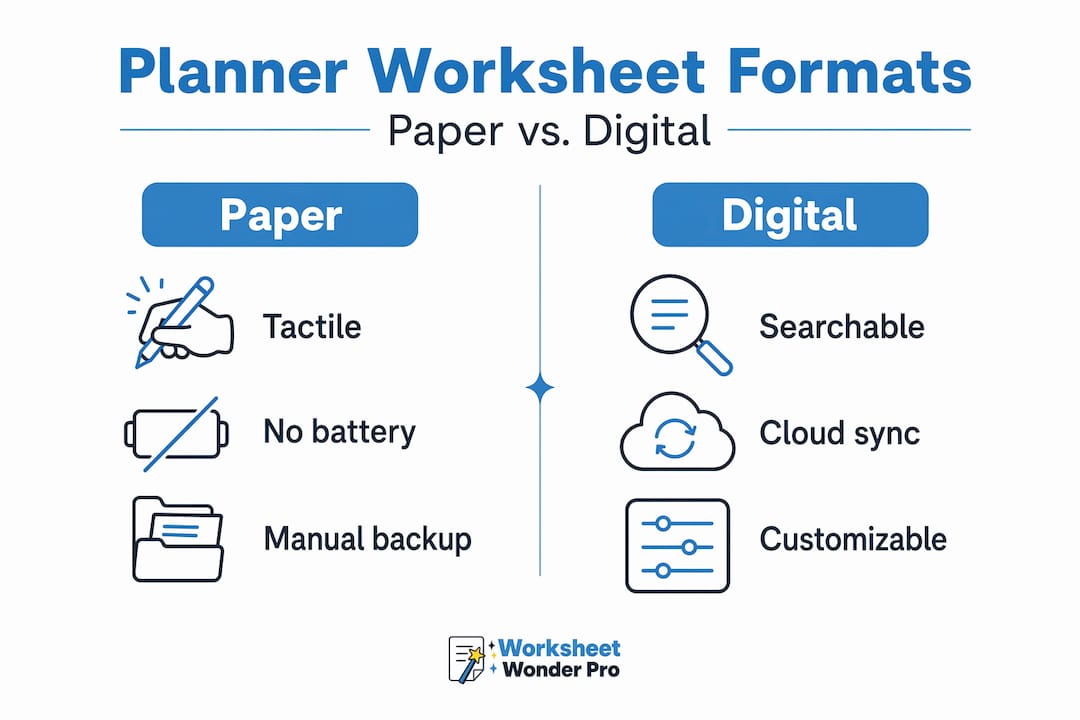
| Feature | Paper Worksheet | Digital Worksheet |
|---|---|---|
| Accessibility | Requires printing or purchase | Available on phone, tablet, laptop |
| Customization | Limited after printing | Editable at any time |
| Habit tracking | Manual checkboxes | Can include auto-reminders |
| Cost | Low per-page print cost | Often free with annotation apps |
| Durability | Can be lost or damaged | Backed up automatically |
How planner worksheets support academic behaviors
The real value of a student planner worksheet is not the content it displays. It is the behavior it promotes. Planners that support consistent homework recording and forward planning by making those behaviors the easiest option produce stronger results than those packed with graphics and features that are rarely used.
Here is how a well-structured planner worksheet supports academic behavior step by step:
- Consistent homework recording. When assignment tracker sections appear on every weekly or daily page, students develop a reflex to log work as soon as it is assigned rather than relying on memory.
- Deadline visibility. Monthly calendar views place all upcoming due dates in one spot, making it harder to miss a test or forget a project.
- Priority focus. Daily top-to-do lists help students identify the two or three tasks that matter most rather than treating every item as equally urgent.
- Progress tracking. Checklists and goal-setting worksheets let students see completed tasks accumulate, which supports motivation over the course of a term.
- Stress reduction. Externalizing all tasks and schedules onto paper or a screen frees mental energy for actual studying.
"Planners that require less explanation and make the right behavior the easiest to follow are more successful." — School Planner Co.
This behavioral framing is why student organization strategies built around planner worksheets outperform simple to-do lists. A list has no structure for time, no connection to goals, and no feedback loop. A worksheet does.
Choosing the right planner format
Not every student needs the same layout. The format that works depends on how the student receives and records homework. Some students get assignments by class period. Others track work by day across all subjects. Matching planner layout to the student's natural recording habit affects how quickly they can log tasks and find them later.
Common format options include:
- Daily planners: One full page per day with time slots, task lists, and notes. Best for students with heavy or unpredictable workloads.
- Weekly planners: A two-page spread covering seven days at a glance. Good for students who plan in weekly cycles.
- Monthly overview pages: Big-picture calendars for tracking project deadlines, tests, and events across the month.
Digital student planners designed for high school and college students typically include study session tracking, reflection pages, and habit logs alongside standard calendar pages. These work well on tablets using annotation apps and can be printed when needed.
Pro Tip: If a student resists using their planner, the problem is usually format mismatch, not laziness. Try switching from a weekly spread to a daily page and see if logging becomes easier.

Reviewing common worksheet design mistakes before selecting a template can save time and help avoid layouts that frustrate rather than support students.
How to use a student planner worksheet effectively
Knowing what a planner contains is only half the picture. Using it consistently is where student planner benefits become real. Daily habits built around the planner drive the actual results.
- Review the planner every morning. Spend two to three minutes checking the day's schedule and top priorities before school starts.
- Log assignments immediately. Record each new task in the assignment tracker the moment it is given, not at the end of the day.
- Break large tasks into steps. Use the daily planning section to divide a research paper or project into smaller tasks spread across multiple days.
- Use priority markers. Mark urgent or high-value tasks with a simple symbol so they stand out during daily review.
- Check in each evening. Mark completed items, move unfinished tasks forward, and preview tomorrow's schedule before bed.
The academic success checklist approach pairs well with this routine, helping students connect daily habits to longer-term academic targets.
Examples and templates to get started
Student planner templates come in several layouts. Understanding the differences helps students and parents pick the right starting point rather than redesigning from scratch.
| Template Type | Best For | Key Sections |
|---|---|---|
| Daily worksheet | Heavy course loads, college students | Hourly time blocks, priority list, mood check |
| Weekly spread | Middle and high school | Subject columns, due dates, weekly goals |
| Monthly overview | Exam and project planning | Calendar grid, monthly goals, key dates |
| Hybrid planner | All levels | Combines monthly, weekly, and daily pages |
Popular worksheet page types across these templates include subject-specific assignment logs, exam countdown trackers, reading logs, and self-reflection prompts at the end of each week. These elements connect to form a system rather than a collection of isolated pages.
Tips for personalizing a student planner template:
- Remove sections the student genuinely will not use to reduce visual clutter
- Add subject-specific pages if a student has one particularly demanding class
- Use color coding for different subjects or priority levels
- Keep the tracking student progress section visible on every weekly spread
Free and paid printable resources are widely available online, and Worksheetwonderpro offers ready-to-use templates that cover all major worksheet types without requiring design experience.
My perspective on what actually makes these tools work
I have reviewed and worked with dozens of planner designs over the years. The most consistent finding is simple. Students do not fail because their planner lacked a watercolor background or a motivational quote section. They fail because the planner was too complicated to fill in during a busy school day.
The planners that get used daily tend to share one quality: low friction. Every field should take ten seconds or less to complete. If a student has to think about where to write something, they will not write it. That is not a motivation problem. It is a design problem.
I have also noticed that parents often buy planners that suit their own organizational style, not their child's. A parent who thinks in monthly blocks might buy a monthly-only planner for a student who processes tasks day by day. The mismatch kills adoption before it starts.
Digital planners are growing in usefulness, especially for students who already spend study time on tablets. But paper still wins for quick capture. A hybrid approach, where a simple paper sheet tracks daily tasks and a digital app handles long-range planning, often works better than either option alone.
The best student planner worksheet is the one a student actually opens every day.
— Pamela
Start planning smarter with Worksheetwonderpro
Worksheetwonderpro offers printable and digital student planner templates designed for practical daily use. The free resources library includes ready-to-use worksheet pages covering daily time-blocking, assignment tracking, goal-setting, and habit logs. Teachers, homeschool families, and parents can browse templates by format and customize layouts without starting from scratch. For more advanced customization, Worksheetwonderpro provides professional-grade tools that let users build planner pages tailored to any student's course load, grade level, or scheduling style. Whether you need a single daily worksheet or a full-semester academic planner, the platform makes it fast to produce something a student will actually use.
FAQ
What is a student planner worksheet?
A student planner worksheet is a structured document that helps students organize assignments, track goals, and manage time. It typically includes daily or weekly calendar grids, assignment trackers, habit logs, and goal-setting sections.
How is a planner worksheet different from a regular agenda?
A regular agenda records events. A planner worksheet adds behavioral tools like habit trackers, priority markers, and goal-setting pages that actively support academic performance over time.
What should a student planner worksheet include?
A useful student planner worksheet includes a monthly overview, weekly or daily time-blocking grids, an assignment tracker, a goal-setting section, and a habit or wellness tracker. Some printable versions contain all of these elements across hundreds of pages.
How often should a student use their planner worksheet?
Daily use produces the best results. Students should check their planner each morning and evening, log assignments immediately when given, and review upcoming deadlines at the start of each week.
Are digital planner worksheets as effective as paper ones?
Both work well depending on the student. Digital planners offer flexibility for editing and access across devices, while paper planners support quick, distraction-free task logging. Many students benefit from using both formats together.