
Most educators and parents have seen life skills worksheets, but few can clearly explain what separates a good one from a printout that gets ignored. Understanding what is a life skills worksheet means looking beyond the paper itself. These tools are structured documents with prompts and exercises designed to help learners practice real-world abilities like planning, budgeting, decision-making, and emotional regulation. This guide breaks down the types, design principles, and practical applications so you can choose or create worksheets that actually build skills.
Table of Contents
- Key takeaways
- What a life skills worksheet actually is
- Types of life skills worksheets
- Design principles and effective use
- Real-world examples and applications
- A perspective on what actually works
- Build better life skills worksheets with Worksheetwonderpro
- FAQ
Key takeaways
| Point | Details |
|---|---|
| Clear definition matters | A life skills worksheet is a printable or digital sheet with prompts for practicing specific real-world skills. |
| Two distinct functions | Worksheets serve as either skill practice tools or skill monitoring tools. Mixing them reduces clarity for learners. |
| Repetition drives results | Weekly or regularly repeated worksheet sets build skill carryover far better than one-off exercises. |
| Visual support increases access | Consistent formats and picture supports make worksheets effective for diverse learners. |
| Match type to goal | Choosing the right worksheet format depends on whether the goal is practice, reflection, or progress tracking. |
What a life skills worksheet actually is
A life skills worksheet is a printable or digital sheet with prompts and exercises for practicing skills like planning, communication, budgeting, and problem-solving. It is not a test. It is not a lecture summary. It is a structured practice tool.
These worksheets appear in many formats depending on the skill being taught:
- Schedules: Weekly or daily planning sheets that build time management
- Mood diaries: Logs where learners record emotions, triggers, and responses
- Checklists: Step-by-step task breakdowns for daily living activities
- Rubrics: Self-assessment tools that rate skill performance across defined criteria
- Vocabulary practice sheets: Pages that define and apply terms related to life skills like "budget," "compromise," or "boundary"
- Thought records: Structured columns for reflecting on situations, emotions, and alternative responses
The key function of each format is breaking a complex skill into repeatable, manageable parts. A learner who struggles with stress management does not benefit from a paragraph about it. They benefit from a structured log that walks them through identifying a stressor, naming their reaction, and writing a planned response. That is what a worksheet does that a lesson alone cannot.
Understanding the difference between skill drill worksheets and life skills worksheets helps clarify their roles in a broader curriculum.
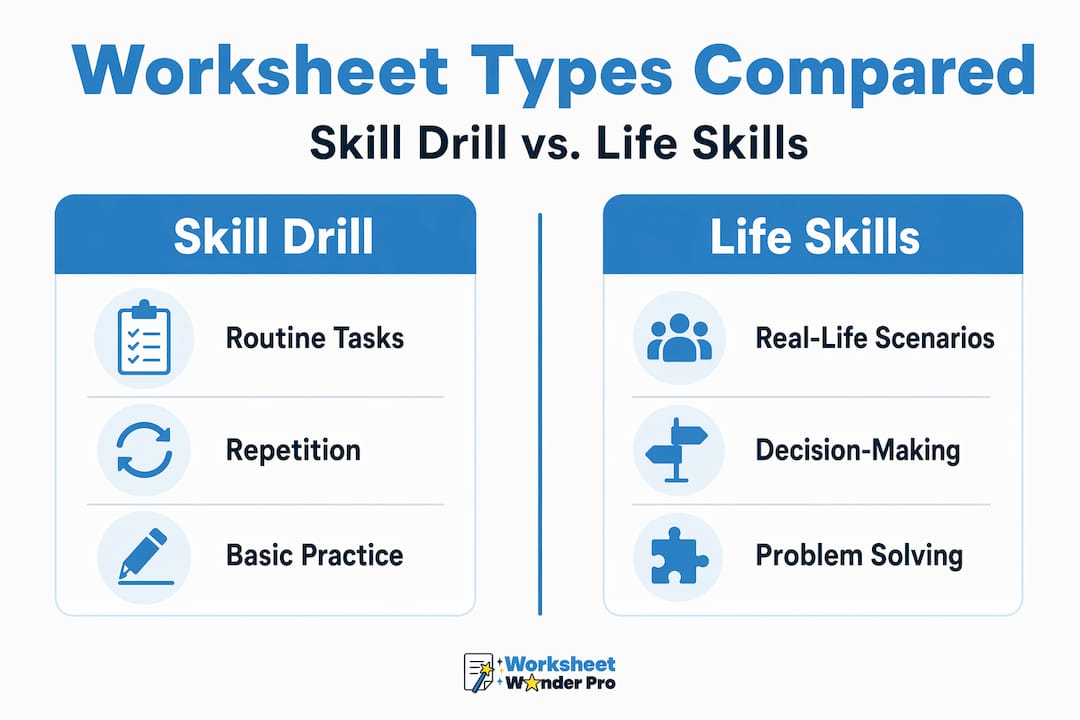

Types of life skills worksheets
Life skills worksheets fall into several categories, each targeting a different area of development. Knowing the categories helps you select the right tool.
| Worksheet type | Skill focus | Example format |
|---|---|---|
| Daily living and self-management | Morning routines, hygiene, time use | Weekly schedule templates, habit trackers |
| Emotional regulation | Stress, anger, anxiety | Mood diaries, managing stress logs |
| Decision-making and self-control | Choices, consequences, planning | Better Choices worksheets with prompts |
| Progress tracking and self-advocacy | Goal setting, skill reflection | Checklists, rubrics with rating scales |
| Vocabulary and comprehension | Understanding life skills terms | Matching, fill-in, define-and-use exercises |
Each type serves a distinct purpose. Weekly schedule templates and mood diaries work well for early and middle adulthood life skills support and are commonly distributed as printable PDFs.
The Better Choices worksheet is a strong example in the decision-making category. It teaches self-control by providing pre-planned response strategies with specific prompts like "when to use it" and "why it is better." This format turns the worksheet into a real-time reference tool, not just a reflection exercise after the fact.
For tracking, a self-advocacy skills checklist with 11 categories covers self-awareness, goal setting, asking for help, and setting boundaries. It functions as both an assessment and a goal-setting record.
Key worksheet categories to keep in your toolkit:
- Daily living worksheets for building consistent routines at home or school
- Emotional regulation tools for learners working on managing reactions
- Decision-making planners for teens navigating consequences and choices
- Progress checklists for IEP support, counseling, or self-directed learning
Reviewing classroom worksheet types gives additional context for how these fit into a broader teaching structure.
Design principles and effective use
Good worksheet design follows clear principles. These apply whether you are downloading a resource or building one from scratch.
- Separate practice from monitoring. Life skills worksheets serve two distinct functions: skill practice, which is the rehearsal of steps, and skill monitoring, which is tracking progress. Mixing these in one sheet can confuse learners. Use practice sheets during learning, and monitoring sheets to review growth.
- Use consistent, predictable formats. Picture representations and consistent page formats support diverse learners by reducing cognitive load. When the layout is familiar, the learner focuses on the skill, not the format.
- Build in repetition. Weekly repeated worksheet sets build skill carryover far better than one-off exercises. A set of 52 weekly pages covering 18 life skills topics with visual supports is one strong model of this approach.
- Follow stepwise sequences for emotional skills. Worksheets that mirror a CBT thought record format use structured columns for situation, thought, emotion, evidence, alternative view, and revised emotion rating. This sequence teaches the process itself, not just asks for reflection.
- Design for active use, not passive reading. Worksheets should require the learner to write, rate, check, or plan something. Passive worksheets with only reading prompts do not build skills.
Pro Tip: Avoid common design mistakes by keeping each worksheet focused on one skill or one step in a process. Overloading a single page reduces completion rates and makes it harder for learners to internalize what was practiced. For more on this, see worksheet design mistakes to avoid.
Real-world examples and applications
The most effective life skills worksheets work within a routine, not as standalone tasks. Here is how they show up in practice across different settings.
In classroom settings, educators use morning work worksheet sets that cover multiple topics with visual supports. These create a consistent start to the day while building vocabulary, planning habits, and self-awareness over time. The structure matters as much as the content.
At home, parents use daily schedule worksheets to help children with autism, ADHD, or developmental delays build predictable routines. A simple checklist for morning hygiene steps or a weekly chore chart with checkboxes qualifies as a life skills activity with real daily impact.
Youth leaders in ministry or community programs use goal-setting and self-advocacy sheets to help teens articulate what they want, identify barriers, and plan concrete steps. These sheets also create useful records for mentoring conversations.
Practical applications to consider:
- Use emotion logs weekly to help learners spot patterns in reactions over time
- Pair decision-making worksheets with role-play scenarios for stronger skill transfer
- Adapt worksheet vocabulary and visuals for different age groups, starting with pictures and simple words for younger learners
- Use progress tracking worksheets alongside goal-setting sheets so learners can see change over time
For home settings specifically, exploring types of classroom activities can help parents see how worksheets fit into a broader learning routine.
A perspective on what actually works
I have reviewed hundreds of life skills worksheets across classroom, home, and youth ministry settings. The most common mistake I see is treating all worksheets as interchangeable. A mood diary is not the same as a decision-making planner. Using the wrong format for the goal wastes time and frustrates learners who do not see the connection between the exercise and real behavior.
What I have found actually works is pairing the right format with a clear, single goal. A teen learning to manage anger does not need a five-page packet. They need one structured sheet they use weekly, with a familiar layout, until the process becomes automatic.
The other consistent gap I see is inconsistency. Educators introduce a worksheet once and move on. Skills do not form from single exposures. The worksheets that build real ability are the ones used repeatedly, reviewed briefly, and connected back to daily life.
— Pamela
Build better life skills worksheets with Worksheetwonderpro
Worksheetwonderpro gives educators, parents, and youth leaders the tools to create and access worksheets that cover real-world skills without spending hours on design.
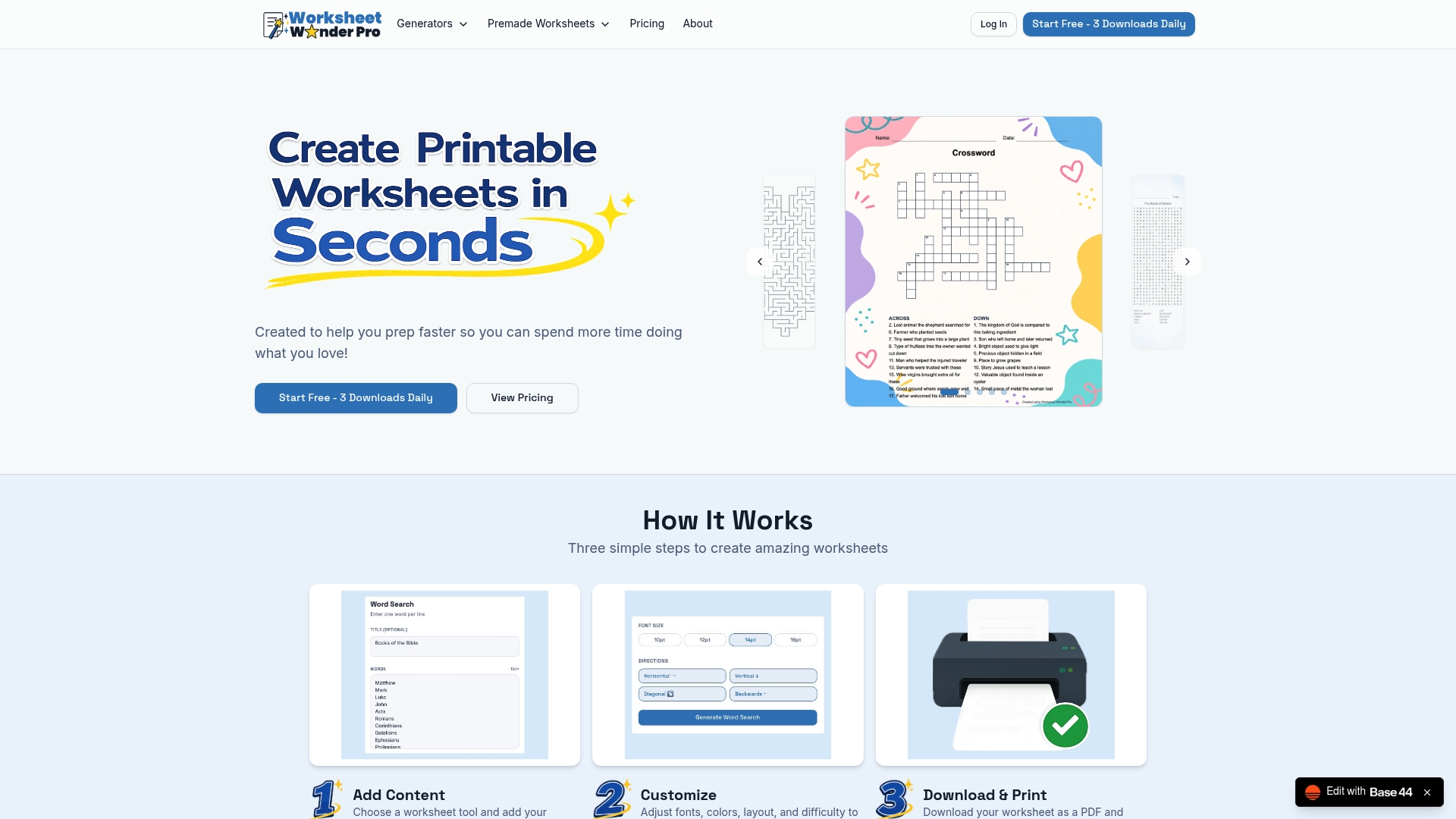
The platform includes ready-made resources and a customizable creator tool. Whether you need a weekly schedule template, a self-advocacy checklist, or a daily living activity sheet, the free resources page is a practical starting point. Teachers working on larger curriculum sets can explore the teacher resources section for structured, classroom-ready materials. For full access to pro-level creation tools and a deeper library, Worksheetwonderpro offers the features needed to build consistent, effective life skills programs from one place.
FAQ
What is a life skills worksheet?
A life skills worksheet is a printable or digital document with structured prompts and exercises for practicing skills like planning, budgeting, communication, and emotional regulation. It breaks complex real-world skills into manageable, repeatable steps.
What are the main types of life skills worksheets?
The main types include daily living worksheets, emotional regulation logs, decision-making planners, vocabulary practice sheets, and progress tracking checklists or rubrics. Each type targets a different skill set.
How are life skills worksheets used in schools?
Teachers use them as morning work, homework, or independent practice tools. Weekly worksheet sets covering multiple topics with visual supports are one common format for building skills over time.
What makes a life skills worksheet effective?
Effective worksheets focus on one skill, use a consistent format, include visual supports, and are repeated regularly. Separating practice sheets from monitoring sheets also improves clarity for learners.
Can parents use life skills worksheets at home?
Yes. Parents use daily schedule sheets, chore checklists, and emotion logs to build routines and self-management skills in children and teens. Simple, visual formats work best for younger learners.