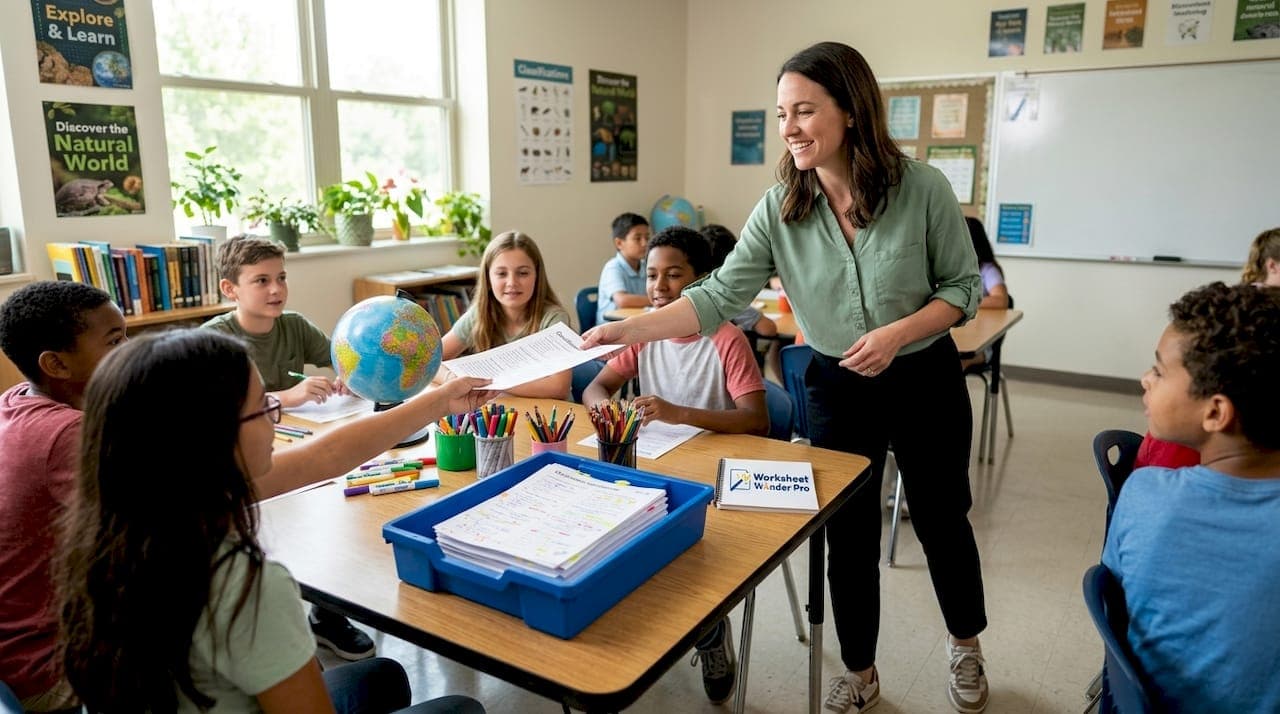
A classification worksheet is a structured learning tool that asks students to sort, group, and label items based on shared properties or characteristics. Teachers, homeschool parents, and students encounter these worksheets across subjects from biology to language arts, yet many treat them as simple sorting tasks. They are not. Understanding what a classification worksheet actually does, and how to build one well, changes how effectively it supports learning. This guide covers the definition, types, creation steps, and benefits of classification worksheets in one place.
Table of Contents
- Key takeaways
- What is a classification worksheet?
- Types and examples of classification worksheets
- How to create a classification worksheet
- Uses and benefits of classification worksheets
- My take on classification worksheets
- Create classification worksheets with Worksheetwonderpro
- FAQ
Key takeaways
| Point | Details |
|---|---|
| Classification worksheets require reasoning | Students justify groupings, not just sort items, which builds critical thinking. |
| Multiple types exist | Worksheets vary by subject, from biological taxonomy to concept grouping and object sorting. |
| Structure matters in design | Clear categories, manageable steps, and an answer key improve student outcomes. |
| Benefits go beyond organization | These worksheets develop communication, reasoning, and self-assessment skills. |
| Anyone can create one | Following a simple step-by-step process produces effective worksheets for any grade level. |
What is a classification worksheet?
A classification worksheet is a printed or digital activity that presents a set of items and asks the learner to organize them into defined groups based on observable or conceptual properties. The classification worksheet definition is straightforward: it is a tool for structured grouping with reasoning at its core.
What separates classification worksheets from basic sorting activities is the expectation that students study properties and justify their groupings rather than guess. A sorting activity might ask a child to put red shapes in one pile and blue shapes in another. A classification worksheet asks the student to identify the property being used, apply it consistently, and sometimes explain why an item belongs in a specific group.
These worksheets show up across subjects. In science, students classify living organisms by kingdom or habitat. In English, they group words by part of speech or word family. In math, they sort shapes by number of sides or angles. In social studies, they organize historical events by time period or region.
Pro Tip: When selecting items for a classification worksheet, include at least one item that could reasonably fit in two categories. This forces students to think more carefully and produces better reasoning practice.
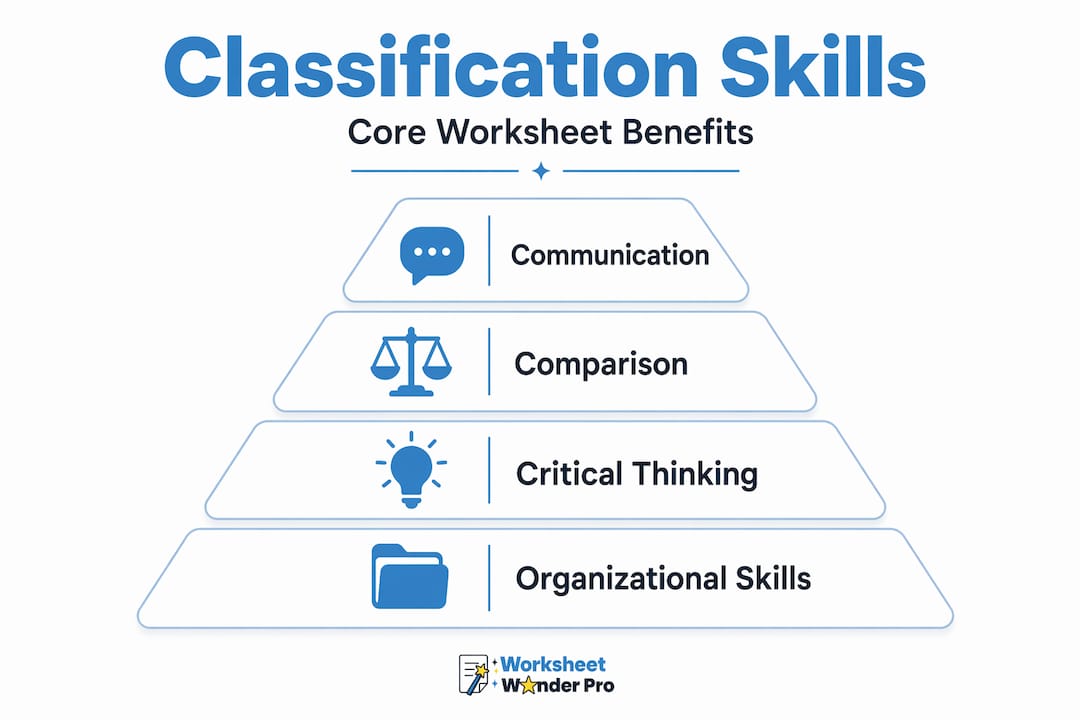
The educational goals behind classification worksheets include building organizational skills, strengthening comparison abilities, and developing the habit of looking for patterns. These are skills that transfer across subjects and grade levels.
Types and examples of classification worksheets
Classification systems vary widely depending on the content and learning objective. Understanding the main types helps educators and parents choose the right format for their needs.
The most common types include:
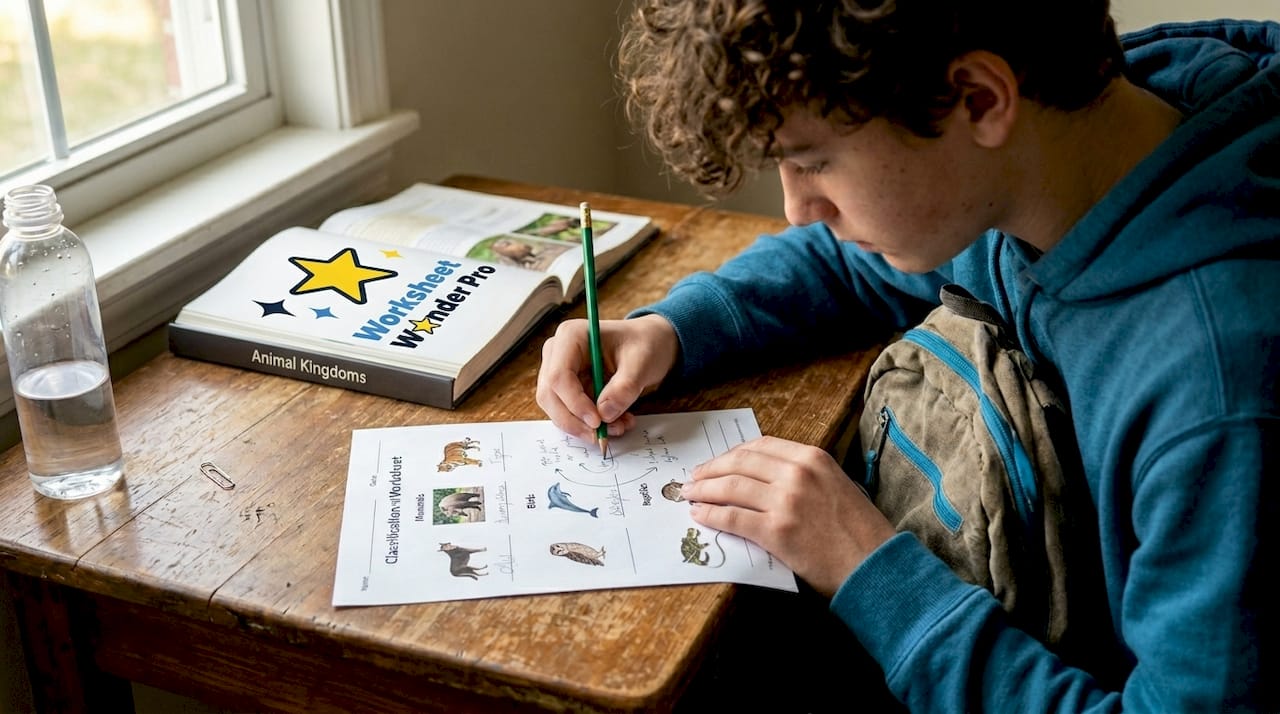
- Biological classification worksheets. Used in science classes to teach taxonomy, kingdoms, and species groupings. Students place organisms into categories like mammals, reptiles, or amphibians based on observable traits.
- Object sorting worksheets. Common in early elementary grades. Students group everyday items by color, size, material, or function.
- Concept grouping worksheets. Used in language arts, history, or math. Students sort vocabulary words, events, or numbers into conceptual categories.
- Chronological classification worksheets. Students place events or items in order by time period or sequence, common in history and literature.
The table below shows how these types differ across key dimensions:
| Type | Common subjects | Target age group | Primary skill |
|---|---|---|---|
| Biological classification | Science | Grades 4 and up | Taxonomy and observation |
| Object sorting | General, science | Grades K to 3 | Visual and tactile grouping |
| Concept grouping | Language arts, math | Grades 2 and up | Abstract reasoning |
| Chronological classification | History, literature | Grades 3 and up | Sequencing and context |
For example, a biology teacher might use a worksheet where students classify living organisms by assigning them to kingdoms and then subgroups, building understanding of taxonomic hierarchy. A homeschool parent teaching a 7-year-old might use an object sorting worksheet with pictures of animals and vehicles printed on cards.
Knowing which type fits the learning goal prevents the common mistake of using a complex worksheet format for a simple concept, or vice versa.
How to create a classification worksheet
Creating a classification worksheet from scratch is straightforward when the process is broken into clear steps. Scaffolded tasks with clear steps reduce confusion and keep students focused on the learning goal rather than the mechanics of the task.
- Identify the purpose. Decide what skill or concept the worksheet targets. Is it vocabulary grouping, biological taxonomy, or sorting by physical property? The purpose determines everything that follows.
- Define the categories. Choose two to five clear, non-overlapping categories. Ambiguous category labels are one of the most common design errors. For example, "living things" and "animals" overlap. Use "plants" and "animals" instead.
- Select the items. Gather 10 to 20 items that clearly belong to one of the categories. Mix in one or two edge cases to push students to think more carefully.
- Design the layout. Provide labeled columns or boxes for each category. Add a brief instruction line at the top. Keep the visual design clean. Avoid cluttering the page with decorative elements that compete with the content.
- Add an answer key. Worksheets with answer keys allow students to self-check and reduce stress around assessment. This also makes the worksheet useful for independent study, not just supervised class time.
- Test it before distributing. Run through the worksheet yourself. Check that every item clearly fits one category and that the instructions are unambiguous.
Pro Tip: Avoid common worksheet design mistakes like using too many categories at once or writing instructions that assume prior knowledge. Simple language and a clean layout make the activity accessible to more learners.
Digital tools simplify the creation process. Worksheetwonderpro offers a worksheet creation tool that lets teachers and parents build custom classification activities without starting from a blank page.
Uses and benefits of classification worksheets
Classification worksheets serve purposes that go well beyond keeping students busy. Students who sort and create category hierarchies develop comparison skills and organizational habits that carry into reading, writing, and problem-solving.
"Classification activities require students to study object properties and form reasoned justifications. This moves the task from passive recall to active thinking." — Classifying Objects Lesson Plan
The cognitive benefits are specific and measurable. Here is what classification worksheet activities develop:
- Critical thinking. Classification develops critical thinking because students must analyze properties before assigning items to groups.
- Communication skills. Worksheets that ask students to record conclusions build the ability to explain reasoning in writing.
- Engagement and ownership. Inquiry-based classification activities increase student engagement because students make decisions rather than just receive information.
- Assessment readiness. Curriculum-aligned worksheets improve student confidence and prepare them for formal testing.
- Differentiation support. Classification worksheets scale easily. Simpler versions with pictures and two categories work for early learners. More abstract versions with written items and five categories challenge older students.
Teachers use classification worksheets as formative assessments, warm-up activities, and homework. Parents use them as structured review tools during home learning sessions. Students use them independently for exam preparation. The types of classroom worksheets available today cover every subject and grade level, making it practical to incorporate classification activities into any routine.
My take on classification worksheets
I have seen classification worksheets dismissed as low-effort busywork. That view misunderstands what a good one actually requires from a student.
In my experience, the students who struggle most with classification worksheets are not the ones lacking knowledge. They are the ones who have never been asked to explain why something belongs somewhere. That is the real skill being practiced. The worksheet is just the vehicle.
What I have found works best is designing worksheets with one deliberate challenge item: something that does not fit neatly into any category. Students who engage with that item are doing genuine analytical work. Students who skip it reveal exactly where instruction needs to go next.
The misconception I see most often is that classification is a lower-order skill because it looks like sorting. It is not. When students write out justifications for their groupings and then track their reasoning over time, the growth in analytical clarity is visible. Treat classification worksheets as thinking tools, not filing exercises, and the results follow.
— Pamela
Create classification worksheets with Worksheetwonderpro
Worksheetwonderpro is built for teachers, homeschool families, and ministry leaders who need effective worksheets without spending hours building them from scratch.
The platform offers a full worksheet creation tool for custom classification activities and a library of premade worksheets that cover subjects from science taxonomy to language arts concept grouping. Templates are designed with clean layouts, clear category labels, and answer key support built in. Whether you need one worksheet for tomorrow's lesson or a full unit set, Worksheetwonderpro at worksheetwonderpro.com has ready-to-use options across every grade level.
FAQ
What is a classification worksheet?
A classification worksheet is a structured activity where students organize items into defined groups based on shared properties or characteristics. It goes beyond simple sorting by requiring students to identify and justify the criteria used for grouping.
What are classification categories?
Classification categories are the defined groups used to organize items on a worksheet. Effective categories are clear, distinct, and non-overlapping. Examples include living versus non-living, nouns versus verbs, or mammals versus reptiles.
What are the benefits of classification worksheets?
Classification worksheets build critical thinking, organizational skills, and communication abilities. Research shows they also improve student confidence and preparation for assessments when aligned with curriculum goals.
How do you create a classification worksheet?
Identify the learning purpose, define two to five clear categories, select items that fit those categories, design a clean layout with labeled columns, and add an answer key. Testing the worksheet before distributing it prevents unclear instructions from reaching students.
What are examples of classification worksheets?
Common examples include biological taxonomy worksheets for science, word sorting worksheets for language arts, shape grouping worksheets for math, and historical event worksheets for social studies. Each type targets different skills and age groups.